Jayme Reid is an SEO Specialist at BizIQ with more than 13 years of experience in search engine optimization, content strategy, technical SEO, and structured data. He is certified in Google, Ahrefs, and Answer Engine Optimization (AEO), and he manages SEO programs for more than 40 businesses across a wide range of industries. His work focuses on helping manufacturers and service businesses get found in Google search and in AI-driven answer engines such as ChatGPT, Google AI Overviews, and Perplexity.
Every article Jayme publishes on KeeVac Industries is reviewed by the KeeVac team before it goes live, so the information on vacuum lifting and material handling equipment is checked for technical accuracy by people who build and support these systems every day. His research draws on first-party search data from Google Search Console, keyword and competitive data from Ahrefs, and tier 1 industry sources.
Upgrading your industrial vacuum truck fleet is a significant investment, and getting it right can have a lasting impact on your business’s operational efficiency, profitability, and customer satisfaction. Whether you’re managing a septic service company, industrial cleaning operation, or municipal wastewater fleet, there are several factors to evaluate before making your decision.
Evaluate Your Business Needs
Before diving into the specifications and pricing, it’s essential to assess your current and future business needs. Start by asking:
What services do we offer? Consider whether you specialize in septic services, grease trap cleaning, hydro excavation, or industrial waste removal. Each service may require different vacuum truck configurations.
What are our most common job sizes? If your jobs primarily involve small-scale work, a slide-in pumper unit or compact truck might be ideal. For larger operations, a full-sized industrial vacuum truck with a higher-capacity tank is essential.
Do we need additional trucks to meet demand? An upgrade isn’t always about replacing old equipment. Expanding your fleet may be necessary to meet growing customer demand or enter new markets.
Aligning your vacuum truck fleet to your business model ensures you get the most value out of your investment.
Tank Capacity and Material Options
The size and material of the vacuum truck tank are critical considerations. The tank must be large enough to handle your typical workloads without frequent stops for emptying. Here’s what to consider:
Tank Capacity
Tanks between 300 and 1,000 gallons may suffice for smaller jobs, such as residential septic pumping or grease trap services.
For industrial or municipal projects, you’ll want tanks with a capacity of 2,000 gallons or more.
Tank Material
Aluminum tanks: Lightweight and corrosion-resistant, ideal for industries working with corrosive materials or seeking better fuel efficiency.
Stainless steel tanks: Highly durable and resistant to extreme conditions, but heavier than aluminum. Best suited for industrial applications involving hazardous waste or chemicals.
Carbon steel tanks: Durable and cost-effective for standard vacuum truck operations, though less resistant to corrosion compared to stainless steel.
The tank material will directly impact the truck’s lifespan and maintenance costs, so choose wisely based on your workload.
Chassis Selection
The chassis serves as the foundation of your vacuum truck, and its quality and compatibility are crucial for optimal performance. At KeeVac Industries, we work with new and used chassis from industry-leading brands like Ford, Chevrolet, Ram, Peterbilt, and Freightliner.
Key Chassis Considerations
Payload Capacity: Ensure the chassis can handle the combined weight of the tank, pump system, and waste materials.
Fuel Efficiency: Look for chassis options that offer good fuel economy to reduce operating costs.
Terrain Adaptability: If you frequently operate in rural or off-road environments, a chassis with four-wheel drive is a must.
Maintenance and Repair Costs: To minimize downtime, opt for chassis brands with readily available parts and service centers.
Selecting a reliable chassis sets the stage for a durable and efficient industrial vacuum truck.
Pump System Requirements
The pump system is the heart of your vacuum truck, and its performance will directly influence your operational efficiency. Here’s what to look for:
Vacuum Power
Consider the cubic feet per minute (CFM) and inches of mercury (Hg) rating of the pump. High-power pumps are essential for jobs involving heavy sludge or long suction distances.
Type of Pump
Rotary vane pumps: Known for durability and efficiency, these pumps are ideal for septic and industrial applications.
Liquid ring pumps: Suited for wet and hazardous waste applications due to their ability to handle liquids without damage.
Diaphragm pumps: Often used for smaller, portable units like slide-in pumper systems.
Ease of Maintenance
Choose a pump system with accessible components for routine maintenance. Regular servicing reduces the risk of costly repairs and downtime.
New vs. Used Vacuum Trucks
Upgrading your fleet doesn’t always mean buying new trucks. Used vacuum trucks can be a cost-effective option, provided they meet your operational standards.
When to Buy New
You need a custom build tailored to your exact specifications.
Your business requires the latest technology for increased efficiency.
You prefer the peace of mind that comes with a factory warranty.
When to Buy Used
You’re expanding your fleet on a budget.
You have access to trusted up-fitters like KeeVac Industries, who ensure used trucks are in top working condition.
You only need a short-term solution for a specific contract or project.
KeeVac Industries sources high-quality used chassis and retrofits them with premium tanks and pump systems, providing you with reliable trucks at a fraction of the cost.
Compliance and Regulations
Every region has specific regulations for waste management, emissions, and equipment safety. Make sure your upgraded fleet meets or exceeds these standards.
Emissions Standards
With growing environmental concerns, many jurisdictions have strict emissions requirements for industrial vehicles. Newer vacuum trucks are often equipped with advanced engines that comply with these regulations.
Waste Disposal
Ensure your fleet includes features like secondary shut-off valves and spill containment to meet waste transportation and disposal standards.
Working with an experienced up-fitter like KeeVac Industries ensures compliance with all industry and regulatory requirements.
The Role of Slide-In Pumper Units
Slide-in pumper units are a game-changer for businesses seeking versatility and cost savings. KeeVac Industries specializes in aluminum slide-in units that can be installed in the bed of most full-size pickup trucks.
Advantages of Slide-In Units
Affordability: A cost-effective alternative to purchasing a full vacuum truck.
Portability: Easily transferable between vehicles, making them ideal for seasonal or contract-based work.
Flexibility: Perfect for small-scale jobs, such as residential septic pumping or grease trap services.
Slide-in units are an excellent option for businesses looking to expand their service offerings without breaking the bank.
Total Cost of Ownership
When upgrading your fleet, it’s crucial to evaluate the total cost of ownership (TCO), which includes:
Initial Purchase Price: New builds will generally cost more upfront than retrofitted or used models.
Operating Costs: Factor in fuel efficiency, maintenance, and repair expenses.
Depreciation: Vacuum trucks that retain value longer can provide a better return on investment.
Downtime: Reliable equipment with minimal downtime is worth the premium.
Working with a trusted partner like KeeVac Industries can help you optimize your budget while ensuring you get high-quality, reliable equipment.
Customization Options
One of the biggest benefits of working with a company like KeeVac Industries is the ability to customize your vacuum truck. From tank size and material to pump systems and chassis selection, KeeVac can build a truck that perfectly aligns with your business needs.
Examples of Customization
Adding auxiliary systems like hydro-jetters for versatility.
Installing advanced safety features for hazardous waste operations.
Integrating GPS and telematics for fleet management.
Custom builds ensure that every aspect of your truck is optimized for efficiency and profitability.
Partner with a Trusted Up-Fitter
The success of your fleet upgrade depends largely on the expertise of your up-fitter. KeeVac Industries has built a reputation as a trusted provider of high-quality industrial vacuum trucks, offering a wide range of options to meet diverse needs.
Why Choose KeeVac Industries?
Experience: As a Denver-based company, KeeVac has years of expertise in designing and building vacuum trucks.
Versatility: From slide-in units to full-sized industrial vacuum trucks, we have options for every business.
Quality: Using new and used chassis from leading brands ensures long-lasting reliability.
Customer Support: KeeVac’s team is committed to helping you find the perfect solution for your business.
Upgrade Your Fleet with KeeVac Industries
Upgrading your industrial vacuum trucks is a significant investment, but with careful planning and the right partner, it can transform your business operations. KeeVac Industries offers a wide range of vacuum trucks and slide-in pumper units built with precision and tailored to your needs.
Whether you’re looking for a brand-new truck or a reliable used option, our team is here to help. Contact us today to learn more about our customizable solutions and start upgrading your fleet with confidence!
Every commercial kitchen depends on regular grease trap cleaning to keep fats, oils, and grease out of the sewer. When a trap or interceptor goes too long without service, grease hardens, solids pile up, and the result is slow drains, foul odors, backups, and fines. The fastest and cleanest way to clear a trap is a vacuum truck, which removes the grease cap, the water, and the settled solids in one sealed process.
A grease trap is a compact unit installed at or near the sinks, while a gravity grease interceptor is a larger tank, usually buried outside the building. Both work the same way. Wastewater slows down, grease floats to the top, solids settle to the bottom, and cleaner water moves on to the sewer. Both also fill up, and a vacuum truck is the equipment that empties them.
Why Grease Trap Cleaning Matters for Kitchens and Sewers
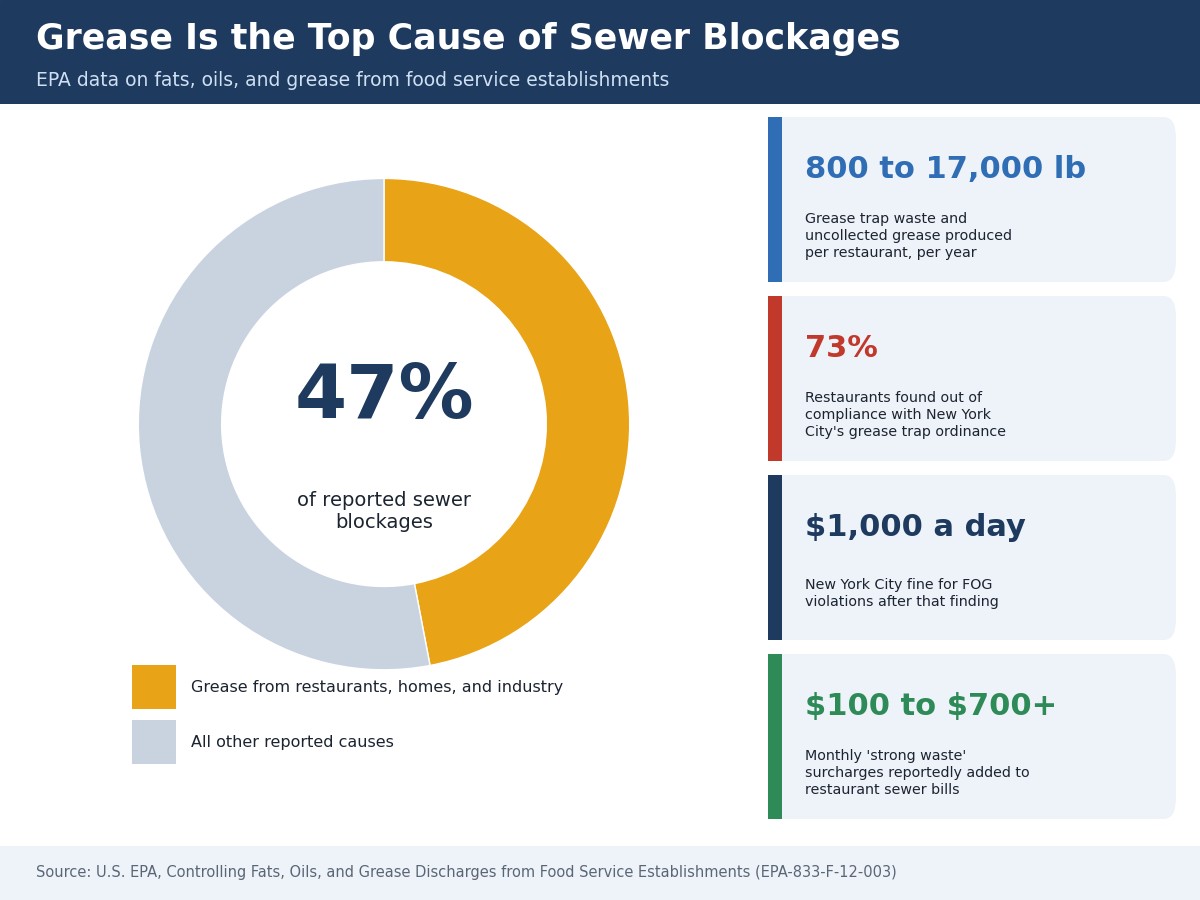
The scale of the problem is documented. The EPA’s 2004 Report to Congress on sewer overflows found that grease from restaurants, homes, and industrial sources is the most common cause of reported sewer blockages, at 47 percent, because grease solidifies and cuts the capacity of the pipe. EPA’s national pretreatment fact sheet adds that annual grease trap waste and uncollected grease can range from 800 to 17,000 pounds per restaurant, and that federal pretreatment rules at 40 CFR 403.5(b)(3) prohibit solid or viscous pollutants in amounts that cause obstruction.
Fines and surcharges. The EPA reports that one major city found a 73 percent non-compliance rate with its grease trap ordinance and responded with a $1,000-per-day fine for FOG violations, and that monthly “strong waste” surcharges of $100 to $700 or more are reportedly added to restaurant sewer bills.
Backups and downtime. A blocked line can shut down dish stations and floor drains in the middle of service.
Failed inspections. Inspectors check pump-out records and the condition of the trap.
Higher repair costs. Grease that escapes the trap hardens in the building’s own drain line.
Why Grease Trap Cleaning Frequency Matters
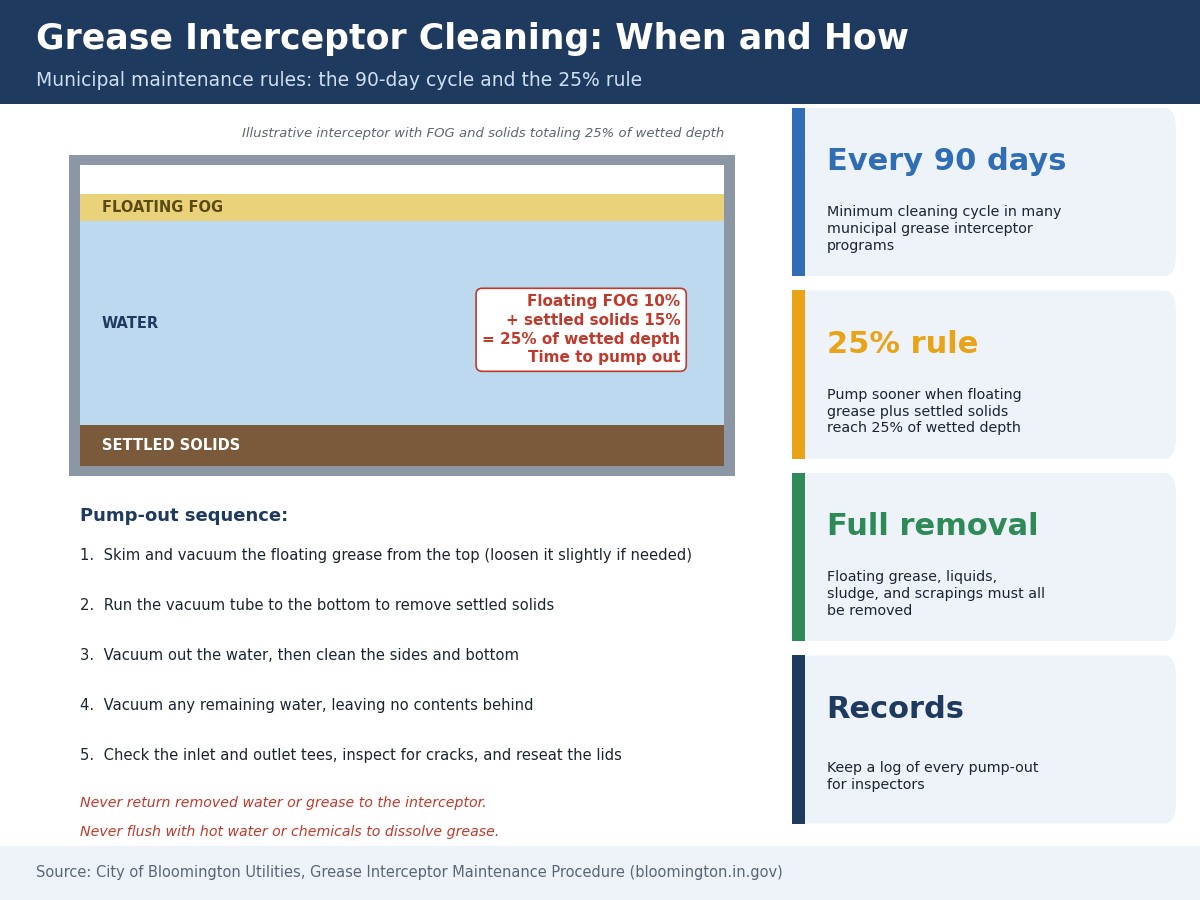
The EPA states that the maintenance frequency a device needs depends on how much FOG a kitchen generates and on the best management practices it follows. Local sewer authorities turn that guidance into a schedule. municipal grease interceptor maintenance procedures are typical: cleaning at least every 90 days, or sooner when the floating grease and settled solids together reach 25 percent of the wetted depth, measured from the water surface to the bottom of the tank.
The 25 percent rule matters because it is a limit on performance, not just a calendar. A busy kitchen with heavy frying can reach 25 percent well before 90 days, and a light-use kitchen may stay under it longer. Operators who track levels at every stop, rather than cleaning on a fixed date, protect both the customer and the sewer. Always confirm the exact interval with the local authority, since the rules vary by jurisdiction.
Grease Trap Cleaning With a Vacuum Truck, Step by Step
A proper service follows the same order at every stop. Skipping steps leaves grease behind, which shortens the time until the next cleaning is due.
Set up the site. Position the truck close to the access lid, place cones and spill containment, and confirm the hose will reach.
Open the lids safely. Remove the covers, ventilate the opening, and check the atmosphere before work begins. Never enter the tank.
Remove the grease cap. Vacuum the floating grease from the surface, loosening it slightly if it has hardened.
Pull the settled solids. Run the vacuum tube to the bottom of the interceptor and remove the sludge.
Vacuum out the water. Take out the remaining liquid until nothing is left to return to the tank.
Clean the surfaces. Scrape and rinse the sides and bottom, then vacuum the rinse water out as well.
Inspect the hardware. Check the inlet and outlet tees, look for cracks or defects, and make sure the lids reseat tightly.
Document and haul. Record the pump-out for the customer and inspectors, then haul the load to an approved disposal facility.
Compared with manual scooping, a vacuum truck keeps the waste sealed, finishes the job faster, and limits the crew’s contact with grease and wastewater. It also makes a complete pump-out realistic, which is what many local rules require.
Grease Trap Vacuum Systems and How They Handle Thick Grease
A vacuum truck works by removing air from a sealed tank so that atmospheric pressure pushes the material up the hose and into the tank. The pump never has to handle the grease directly, which is why vacuum systems cope so well with thick caps and sludge. Protective devices such as an overfill shutoff and a moisture trap keep liquid from reaching the pump, and the truck unloads by gravity or by pressure at the disposal site.
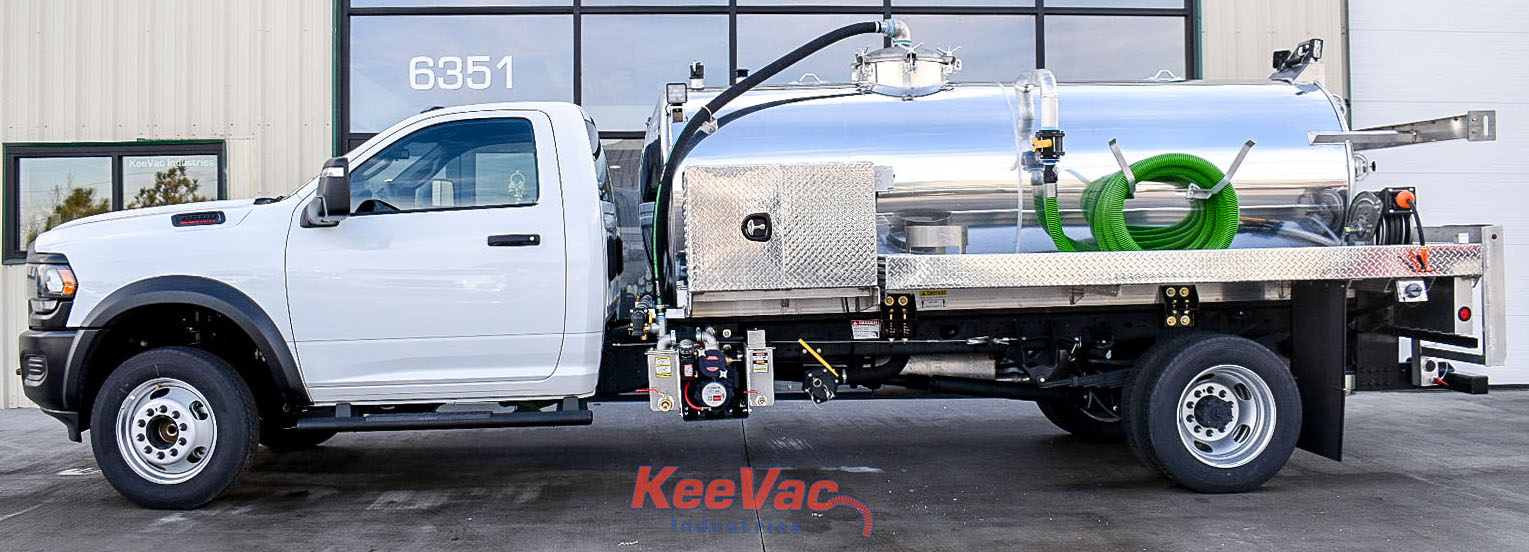
Grease puts more demand on the system than water does. Cold grease is thick, hoses are long, and interceptors can be deep, so a strong pump, a large-diameter hose, and airtight couplings all matter. For reference, a current KeeVac 2,500-gallon build pairs an aluminum vacuum tank with a 338 CFM vacuum pump.
What a Grease Trap Cleaning Truck Needs: Tank, Pump, and Hose
The right truck depends on the size of the traps you service, the distance to the disposal facility, and how many stops you plan to finish before unloading. These are the features that decide productivity on grease routes.
Feature
Why it matters for grease
What to ask about
Tank capacity
A complete pump-out means the tank must hold the whole interceptor
Largest interceptor you service and stops per load
Vacuum pump
Thick grease and sludge need strong, steady vacuum
Pump size in CFM and duty rating
Hose and reel
Deep interceptors need reach and a wide bore
Hose length, diameter, and reel placement
Tank material
Grease residue and cleaning water attack poor materials
Aluminum versus steel and weight on the chassis
Level indicator and overfill shutoff
Prevents overfilling and protects the pump
Sight glass, float valve, and moisture trap
Offload system
Faster unloading means faster turnaround at the disposal site
Gravity discharge, pressure offload, and valve size
Chassis
Carries a full tank of grease every day
Axle ratings, brakes, and engine service access
Tank Size and Complete Pump-Outs Per Load
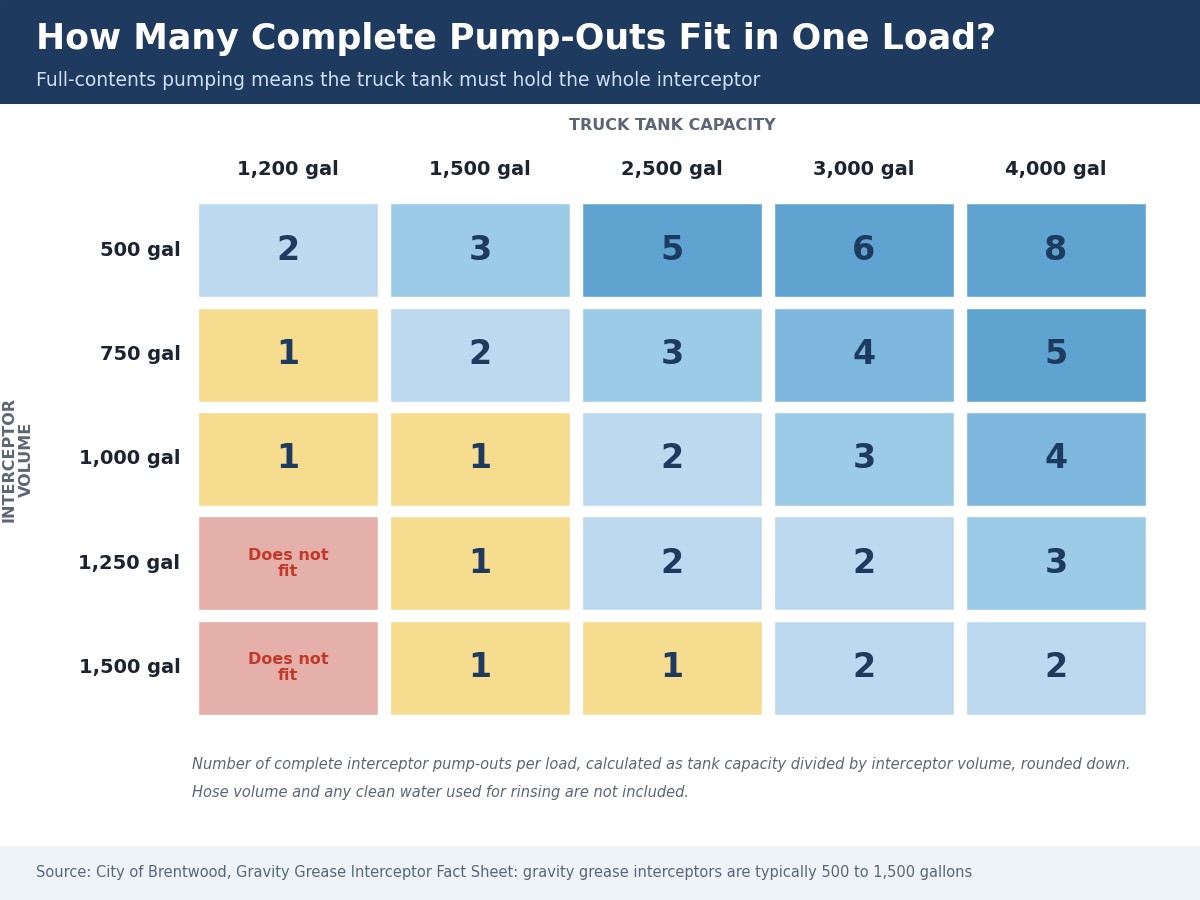
Tank size is the specification most operators underestimate. According to a city fact sheet on gravity grease interceptors, gravity grease interceptors are typically 500 to 1,500 gallons, and many agencies require the whole contents to be removed. That means a truck whose tank is smaller than your largest interceptor simply cannot do the job in one pass.
The grid shows why a bigger tank pays off on busy routes. A 1,200-gallon tank cannot take a full 1,250-gallon interceptor, while a 3,000-gallon tank completes two. Pair that math with the distance to your disposal facility and you can estimate how many stops each load covers and how many loads a crew needs per day.
Grease Trap Cleaning Equipment: Hoses, Reels, and Accessories
The tank and pump get the attention, but the accessories decide how smooth each stop feels. Useful equipment includes:
Hose lengths and reels matched to the deepest and farthest interceptors on the route
Tools for scraping the sides and bottom of the tank
Spill containment, absorbent pads, and a clean-up kit on every truck
High-volume routes and large interceptors call for a full-size truck with a big tank and a strong pump. These trucks hold several complete pump-outs per load and carry the hose lengths needed for deep tanks. KeeVac’s FOG-ready grease truck builds are available on chassis from Ford, Chevrolet, Ram, International, Peterbilt, Freightliner, Mack, Isuzu, and Kenworth.
Slide-In Vacuum Units
Smaller operations often start with a unit that rides in the bed of a pickup. Aluminum slide-in vacuum units are light, quick to install, and easy to remove when the truck is needed for other work. They suit smaller traps and tight access, with the trade-off of more trips to the disposal site.
Small Traps and Food Truck Service
Food trucks, small cafes, and other low-volume kitchens have small traps that do not need a large tank. For that work, compact equipment such as small grease pump-out carts can be a practical fit, especially where a truck cannot reach the trap.
Dual-Use Trucks for Grease and Septic Work
Many haulers run grease routes alongside other liquid-waste work. Because the core hardware is the same, a truck can often be configured for both jobs, which spreads its cost over more billable hours. If that fits your business, look at septic pump truck configurations with an eye to tank material, hose setup, and cleaning between waste types.
Custom Configurations
No two routes are identical. Hose length, reel placement, pump size, compartment layout, and tool storage can all be tailored to how your crew works. When a stock build is close but not exact, custom truck configurations let you match the truck to your stops rather than the other way around.
Safety for Grease Trap Cleaning Crews
Grease interceptors hold decomposing waste, and the EPA notes that hydrogen sulfide generation in the sewer system can cause damage. For crews, the same gas is a safety risk at the tank opening. Good habits are simple and should be non-negotiable:
Work from outside the tank and never enter an interceptor to clear a blockage or retrieve a tool
Wear a personal gas monitor and ventilate the opening before and during service
Use gloves, eye protection, and slip-resistant footwear, and keep a spill kit within reach
Place cones and keep lids and hoses out of traffic paths
Complete a manifest for every load so waste is traceable to an approved disposal facility
Grease is hard on equipment. Residue builds up in hoses, valves, and tanks, and a truck that is not rinsed and inspected regularly loses vacuum and wastes time. A short routine goes a long way:
Before each shift: check pump oil, inspect hoses and gaskets, and test the overfill shutoff
After each load: drain the moisture trap, rinse the hose and tank, and wipe down valves and couplings
Weekly: grease fittings, inspect lid seals, and check the PTO and hydraulic fluid
Each season: follow the pump maker’s service schedule and replace worn vanes, seals, and hoses
Many municipal programs require grease interceptors to be cleaned at least every 90 days, or sooner when floating grease and settled solids reach 25 percent of the wetted depth. The EPA notes that the right frequency depends on how much FOG a kitchen produces and which best management practices it follows, so confirm the schedule with the local sewer authority.
What is the 25 percent rule for grease traps?
The 25 percent rule says a grease trap or interceptor must be pumped out when the combined depth of floating grease and settled solids reaches 25 percent of the wetted depth, even if the regular cleaning date has not arrived. It protects the trap from losing its ability to separate grease from wastewater.
Can a grease trap be partially pumped?
Many local programs require a complete pump-out of the floating grease, liquids, sludge, and scrapings, and they do not allow removed water or grease to be returned to the interceptor. Always check the local ordinance, because some jurisdictions are stricter than others.
What size truck do I need for grease trap cleaning?
The tank has to hold the full contents of the largest interceptor you service. Gravity grease interceptors are typically 500 to 1,500 gallons, so a 2,500-gallon tank can handle two complete 1,000-gallon pump-outs or one 1,500-gallon pump-out per load. Smaller slide-in units suit smaller traps and tighter access.
Can a slide-in vacuum unit handle grease trap cleaning?
Yes, for smaller traps and routes with limited access. A slide-in unit fits in a pickup bed and is easy to deploy, but its tank is smaller, so it makes more trips to the disposal site than a full-size truck. Match the tank to your largest trap and your daily stop count.
What affects the cost of grease trap pumping?
Trap or interceptor volume, service frequency, how much grease and solids have accumulated, distance to the disposal facility, and disposal fees all affect the price. According to the EPA, kitchens that follow best management practices can reduce how often they need service.
Does KeeVac clean grease traps?
No. KeeVac builds the vacuum trucks and slide-in units that licensed grease haulers use. A kitchen that needs a trap serviced should hire a licensed grease hauler.
Spec a Truck for Your Grease Trap Cleaning Routes
The best way to size a truck is to start with your trap sizes, daily stops, and disposal distances. KeeVac’s full equipment lineup includes grease, septic, portable restroom, and custom builds, and every unit can be configured around your routes.
If you want help choosing a tank, pump, and chassis, you can talk with a truck specialist and describe your jobs. The team will recommend a configuration that fits.
Many operators spread the cost of a new truck over time, and equipment financing options can put a unit to work while it earns its keep.
Ready to spec a grease trap cleaning truck?
Tell us your typical trap sizes, daily stops, and disposal distances, and we will recommend a tank, pump, and chassis to match.
Septic pump trucks are the unsung heroes of the sanitation industry, tirelessly working to keep systems running smoothly and ensuring that wastewater management is handled efficiently. But like any heavy-duty vehicle, these trucks require consistent maintenance to perform optimally and extend their lifespan. Whether you’re new to the septic industry or a seasoned veteran, ensuring the longevity of your septic truck is critical for your business. Proper maintenance not only maximizes the return on your investment but also keeps your equipment running smoothly, reducing the risk of costly repairs or unexpected downtime.
Regular Fluid Checks and Changes
One of the most basic yet critical maintenance steps for any septic truck is monitoring and changing fluids regularly. Just like any vehicle, oil, coolant, and hydraulic fluids are the lifeblood of your septic truck. Without proper fluid levels, engines and pumps are prone to overheating, wear, and even catastrophic failure.
Engine Oil
Engine oil should be checked daily before operating the septic truck. Dirty or low oil levels can lead to excessive engine wear, reducing the truck’s lifespan. Regular oil changes based on the manufacturer’s recommendations are essential. For most trucks, oil changes are necessary every 5,000 to 7,500 miles, but this can vary depending on usage and operating conditions. Heavy-duty use may necessitate more frequent changes.
Hydraulic Fluids
Your truck’s vacuum system depends on hydraulic fluid to operate efficiently. Low hydraulic fluid levels or dirty fluid can cause the pump to function improperly, leading to costly breakdowns. Be sure to check the hydraulic fluid regularly and top it off as needed. Following the manufacturer’s recommended schedule for full fluid replacement is also important.
Coolant
Overheating is a common issue that can severely damage your septic truck’s engine. Checking coolant levels regularly ensures that the truck operates within a safe temperature range, preventing the engine from overheating. Replenish coolant as necessary and always use the right type specified by the manufacturer.
Inspect Vacuum Pumps and Hoses
The vacuum pump is the heart of your septic truck. It creates the suction needed to remove waste from septic tanks. Routine inspection of the pump and hoses ensures your truck can maintain optimal suction power and operate efficiently.
Pump Maintenance
Your vacuum pump needs regular lubrication to keep running smoothly. Check the oil levels in your pump daily and change them according to the pump manufacturer’s recommendations. Failing to change the pump oil regularly can lead to internal damage, which can result in a costly repair or replacement. In addition, inspect the pump seals and gaskets for wear and tear to avoid leaks.
Hose Inspection
Septic hoses endure a lot of wear and tear, especially when dealing with tough jobs. Over time, they can develop cracks, leaks, or blockages, compromising your truck’s efficiency. Regularly inspect all hoses for signs of damage and replace them as needed. Make sure to clean the hoses after each job to prevent build-up that can lead to blockages.
Tire Maintenance for Safe Operations
Given the weight and size of septic pump trucks, proper tire maintenance is essential not only for safety but also for the truck’s overall performance. Inadequate tire care can result in blowouts, poor fuel efficiency, and uneven wear, all of which can increase operating costs.
Tire Pressure
Check tire pressure regularly—at least weekly or before every job. Both underinflated and overinflated tires can cause issues. Underinflated tires increase rolling resistance, which results in higher fuel consumption and can lead to uneven tire wear. Overinflated tires, on the other hand, reduce traction and increase the risk of a blowout.
Tire Rotation and Alignment
Regular tire rotations help ensure even wear, extending the life of your tires and improving the truck’s fuel efficiency. Misalignment can cause tires to wear unevenly and impact the overall handling of your truck, so it’s important to check alignment periodically, especially after long-distance travel or rough terrain.
Brake and Suspension System Inspections
The braking and suspension systems on your septic truck endure a lot of stress due to the truck’s weight and the loads it carries. Proper maintenance of these systems is crucial for safety and reliability.
Brakes
Brakes are one of the most critical components of any vehicle, especially for a heavy-duty septic truck. Failing to maintain the braking system can lead to accidents or increased stopping distances, particularly when the truck is fully loaded. Regularly inspect brake pads, rotors, and fluid levels. If you notice any squeaking, grinding, or delayed braking, it’s time for immediate inspection and potential repairs.
Suspension System
A well-maintained suspension system ensures a smooth ride and helps distribute the truck’s weight evenly, reducing wear on other components. Regularly inspect the suspension for worn-out shocks, struts, and bushings, and replace them as necessary. A faulty suspension can lead to discomfort for the driver and increase the risk of damage to other parts of the truck.
Keep Your Septic Truck Clean
Keeping your septic truck clean may seem like a minor maintenance step, but it greatly affects the truck’s longevity. The build-up of dirt, sludge, and waste residues can lead to corrosion and rusting, particularly on the chassis, tanks, and hoses.
Exterior Cleaning
Wash your septic truck regularly to remove dirt, grime, and any potentially corrosive substances it might have come into contact with. Pay particular attention to the undercarriage, as this is where rust is most likely to form. Use appropriate cleaning agents that are strong enough to remove waste residues without damaging your truck’s paint or metal components.
Interior Cleaning
Don’t forget the interior of your truck. Keeping the cab clean ensures a pleasant working environment and also helps maintain the integrity of the upholstery and equipment. Clean out any debris, wipe down surfaces, and check for any leaks or spills that could lead to damage over time.
Electrical System Maintenance
Your septic truck’s electrical system controls everything from lights to the engine’s control modules, making it essential for overall functionality. Regularly checking the electrical system ensures that everything runs smoothly.
Battery Health
The battery is the heart of your electrical system. Regularly inspect battery terminals for corrosion and ensure that connections are tight. Batteries typically last 3-5 years, but extreme temperatures and heavy use can shorten this lifespan, so test your battery frequently.
Electrical Components
In addition to the battery, check other electrical components such as lights, sensors, and switches. A faulty electrical system can cause problems ranging from minor inconveniences like non-working lights to major issues like pump failure.
Seasonal Maintenance for Optimal Performance
Different seasons present different challenges for your septic truck, from freezing temperatures in winter to scorching heat in summer. Preparing your truck for seasonal changes ensures that it continues to perform efficiently year-round.
Winterizing Your Septic Truck
In colder months, freezing temperatures can damage your septic truck if it’s not properly winterized. Drain any water from hoses, tanks, and pumps to prevent freezing and cracking. Using antifreeze in your truck’s coolant system helps protect the engine from freezing temperatures.
Summer Heat Precautions
If not properly maintained, your truck’s engine and hydraulic system can overheat in hotter months. To prevent overheating, check coolant and oil levels more frequently during summer and ensure that the cooling system is functioning correctly.
Long-Term Care: Scheduled Servicing
While daily and weekly checks are vital, scheduling regular servicing with a professional mechanic is equally important for the long-term health of your septic truck. Professional mechanics have the expertise and tools needed to inspect hard-to-reach areas, diagnose underlying issues, and ensure that your truck complies with regulations.
Regular Inspections
Scheduling periodic inspections for your septic truck helps identify potential problems before they become major repairs. This can include engine diagnostics, pump testing, and a complete review of the truck’s systems to ensure everything is working properly.
Compliance with Local Regulations
Make sure your septic truck meets all local and federal regulations. Regularly servicing your truck ensures it stays compliant with safety standards, emissions laws, and other operational requirements, which can save you from fines or operational delays.
Trust KeeVac Industries for Your Septic Truck Needs
Maintaining your septic pump truck is essential for its longevity, safety, and performance. By following these essential maintenance tips—from fluid checks to seasonal adjustments—you can ensure that your septic truck will continue to serve your business reliably for years.
If you’re in the market for a septic truck or need vacuum tanks and slide-in pumper units, KeeVac Industries has you covered. Based in Denver, we offer a wide variety of new and used septic pump trucks that are custom-built to your specifications. Whether you need a Ford, Chevrolet, Ram, International®, Peterbilt, Freightliner, Mack, Isuzu, or Kenworth chassis, we can supply it, and our team of experts is ready to assist with any customization you require.
Contact us today to learn more about our products and services and to have us help you find the perfect septic truck for your needs.
Choosing the right vacuum truck for your business is a crucial decision that can significantly impact your operational efficiency, productivity, and overall bottom line. Whether you’re in the septic service industry, industrial waste management, or portable toilet servicing, the right vacuum truck can make or break your daily operations. But with so many options on the market, how do you make the best choice?
Understanding the Types of Vacuum Trucks
The first step in selecting the right vacuum truck is understanding the different types of vacuum trucks available and how they align with your business needs. Vacuum trucks are highly specialized vehicles, and selecting the wrong one can lead to inefficiencies or even costly repairs.
Septic Pump Trucks
Septic pump trucks are designed to pump out and transport liquid waste, typically from residential or commercial septic systems. These trucks come with large tanks and powerful vacuum systems capable of handling various sizes of septic tanks. They are essential for businesses offering septic tank cleaning and maintenance services.
Septic pump trucks from KeeVac Industries are available in various configurations, allowing businesses to choose a setup that matches their typical workload. Whether you need a truck for residential jobs or larger commercial projects, there’s an option for you.
Portable Toilet Service Trucks
Portable toilet service trucks are the ideal solution for businesses specializing in portable toilet rentals or waste servicing. These vacuum trucks are designed with a dual-compartment tank, one for clean water and the other for waste. The vacuum system ensures quick and sanitary waste removal, making these trucks indispensable for outdoor event companies or construction site services.
KeeVac Industries offers highly customizable portable toilet service trucks, ensuring that you get the features you need for efficient waste management.
Slide-In Pumper Units
The slide-in pumper unit is one of the most versatile options on the market. These aluminum units are designed to fit into the full-size bed of most pickup trucks, making them a flexible choice for smaller businesses or those looking to add to an existing fleet.
Slide-in pumper units are ideal for servicing residential septic systems, portable toilets, or grease traps. KeeVac Industries specializes in these units, offering high-quality, durable slide-ins that provide a cost-effective alternative to a full-size vacuum truck.
Choosing the Right Chassis for Your Vacuum Truck
Now that you understand the types of vacuum trucks available, it’s time to focus on selecting the right chassis for your needs. The chassis is the foundation of your vacuum truck, so it’s important to choose one that offers the strength, durability, and compatibility required for your industry.
Chassis Brands and Models
At KeeVac Industries, we use new and used chassis supplied by licensed dealers. Our options include well-known brands such as Ford, Chevrolet, Ram, International®, Peterbilt, Freightliner, Mack, Isuzu, and Kenworth. Each of these brands offers reliable models that are commonly used in the vacuum truck industry, ensuring that you’re working with a trusted and durable foundation.
When choosing a chassis, consider the following factors:
Weight Capacity: Ensure that the chassis can handle the weight of your vacuum tank and any additional equipment. The last thing you want is a truck that struggles to carry the load, which can lead to safety hazards or mechanical issues down the line.
Durability: Different chassis are built for different environments. If your business involves rough terrain or off-road operations, opt for a more rugged chassis designed for industrial work. Brands like Peterbilt and Mack are known for their heavy-duty chassis options.
Fuel Efficiency: Fuel is a significant operating cost for any business and choosing a chassis that offers better fuel efficiency can reduce your long-term expenses. Look for models with newer engine technologies that promote better fuel economy without sacrificing power.
New vs. Used Chassis
Another decision to make is whether to go with a new or used chassis. Both options have their benefits:
New Chassis: A new chassis offers the latest technology, warranties, and peace of mind. It’s an excellent choice if you’re looking for longevity and minimal maintenance issues in the first few years.
Used Chassis: Used chassis can save you money upfront, which benefits smaller businesses or those with tighter budgets. As long as the chassis has been well-maintained, a used option can still provide plenty of value and performance. KeeVac Industries ensures that all used chassis we supply are thoroughly inspected and certified for reliability.
Understanding Pump Systems and Tank Sizes
The performance of a vacuum truck largely depends on its pump system and tank size. These two components will determine how efficiently your truck can handle different jobs, from small residential projects to large commercial tasks.
Pump Systems
There are two primary types of pump systems used in vacuum trucks:
Tri-Lobed and Twin-Lobed Blowers: These pumps are commonly used for Septic and industrial vacuum trucks. They offer high suction power and are ideal for handling heavy liquids or slurries. Tri-lobed blowers are durable and reliable, generating more airflow than a traditional rotary vane pump.
Rotary Vane Pumps: Rotary vane pumps are more common in septic and portable toilet service trucks. They are cost-effective, easy to maintain, and offer good suction power for liquid waste removal.
When choosing a pump system, consider the type of waste you’ll handle and the work volume. A lobed blower might be the better option for businesses needing a high-power system. For those focusing on regular septic maintenance or portable toilet servicing, a rotary vane pump will likely meet your needs.
Tank Sizes
The size of the vacuum tank is just as important as the pump system. A larger tank allows for longer service routes without needing to stop for disposal, which can significantly increase your efficiency.
Common tank sizes range from 500 to 4,000 gallons, but larger custom tanks can also be made for businesses that handle high volumes of waste. Smaller tanks, around 450-2,000 gallons, are ideal for portable toilet service trucks, while larger tanks are more suited for septic and industrial vacuum trucks.
KeeVac Industries offers a wide range of tank sizes to fit your business needs. Whether you need a compact solution for a slide-in pumper unit or a larger tank for a full-size septic truck, we have you covered.
Customizing Your Vacuum Truck
One of the best things about working with KeeVac Industries is the ability to customize your vacuum truck. Every business has unique needs, and having a truck that is tailored to those specific requirements can make a big difference in operational efficiency.
Additional Features
When customizing your vacuum truck, consider additional features that could enhance your operations:
Heated Valves: In colder climates, heated valves prevent waste from freezing and clogging your system.
Secondary Shutoff: A secondary shutoff system prevents waste from entering the pump system if the primary shutoff fails, protecting your equipment from damage.
Hose Reels and Storage: Adding custom hose reels or storage options can keep your equipment organized and easily accessible on the job.
Water Jetting System: A water jetting system can be a valuable addition to your vacuum truck for businesses that frequently deal with clogged systems.
Slide-In Pumper Units
If you’re looking for a versatile and cost-effective option, KeeVac Industries’ slide-in pumper units might be the perfect solution. These lightweight aluminum units are easy to install and remove, offering maximum flexibility for businesses with smaller trucks or varying job requirements.
Invest in the Right Vacuum Truck for Your Business
Selecting the right vacuum truck is a major investment for any business, but by taking the time to consider your specific needs, you can make a decision that will maximize your efficiency, reduce operating costs, and improve your service offerings.
At KeeVac Industries, we understand that no two businesses are alike. That’s why we offer a wide range of vacuum trucks, customizable features, and expert guidance to help you find the perfect fit. Whether you need a full-size septic truck or a versatile slide-in pumper unit, our team is here to ensure you get the right equipment for the job.
Contact Us Today
Ready to find the perfect vacuum truck for your business? Contact us today to explore our range of vacuum trucks, septic pumpers, and slide-in units. With decades of experience and a commitment to customer service, we’ll help you make an informed decision and get your business on the road to success.
In today’s fast-paced and regulatory-heavy food service and industrial sectors, the role of grease tank trucks is indispensable. These unsung heroes of waste management are primarily responsible for ensuring that grease-laden wastewater is safely and efficiently transported, disposed of, or recycled. But there’s so much more to this versatile piece of equipment. Whether you’re a business owner, a waste management professional, or someone in the market for a grease tank truck, understanding the breadth and depth of services these vehicles provide is crucial.
Efficient Grease Trap Cleaning
One of the primary services grease tank trucks provide is grease trap cleaning. Grease traps, also known as grease interceptors, are devices installed in the plumbing systems of commercial kitchens to capture grease and solids before they enter the wastewater system. Over time, these traps accumulate greasy waste that needs to be regularly removed to prevent backups, foul odors, and compliance issues.
Grease tank trucks are specifically designed to clean these traps effectively. Equipped with powerful suction capabilities, these trucks can remove all trapped waste, ensuring the system runs smoothly. Regular cleaning also minimizes the risk of fire hazards and helps businesses comply with local regulations, thus avoiding hefty fines.
Used Cooking Oil Collection and Recycling
Most commercial kitchens generate a substantial amount of used cooking oil. Disposing of this oil improperly can harm the environment and create serious compliance issues. Enter grease tank trucks, which offer a sustainable solution for used cooking oil collection and recycling. Companies providing this service will collect the used cooking oil and transport it to a recycling facility, where it can be converted into biofuels or other useful products.
Using grease tank trucks for this service not only helps businesses manage waste responsibly but also contributes to a circular economy by transforming waste into valuable resources. This eco-friendly approach benefits both businesses and the planet.
Sewer Line and Drain Cleaning
Beyond grease traps, residential, commercial, and industrial sewer lines can become clogged with grease over time, leading to severe blockages that require professional intervention. Grease tank trucks are up for the challenge. Equipped with high-pressure water jetting systems, these trucks can effectively remove grease build-up and restore proper flow within sewer lines and drains.
This service is essential for preventing expensive and disruptive sewer line repairs, ensuring that wastewater systems function correctly, and avoiding public health issues caused by sewage overflows.
Vacuum Excavation
The versatility of grease tank trucks extends to vacuum excavation, a less invasive method for digging and removing soil. This service is especially valuable for projects that require precise digging around utility lines, pipes, and other underground structures. Vacuum excavation using a grease tank truck minimizes the risk of damage, reduces cleanup costs, and maintains a safer work environment.
Utility companies, construction firms, and landscapers often rely on grease tank trucks for this specialized service, which combines safety and efficiency like no other traditional excavation method.
Emergency Spill Response
In industrial settings, accidental grease spills and other hazardous materials can pose significant risks to people and the environment. Grease tank trucks play a crucial role in emergency spill response. Their powerful suction capabilities and capacity to handle large volumes of waste make them ideal for swiftly and safely containing and removing spilled materials.
Having a grease tank truck on standby for emergency situations provides peace of mind. Knowing that your business can quickly and effectively respond to any spill-related incidents minimizes damage and regulatory repercussions.
Grease Rendering Plant Services
Grease rendering plants transform greasy waste into reusable materials such as oils, animal feed additives, and biofuels. Grease tank trucks are essential for transporting raw materials to these rendering plants. They collect waste from various sources and ensure it is delivered in good condition, maintaining the quality required for effective processing.
Partnering with rendering plants and utilizing grease tank trucks for transportation is a profitable and environmentally friendly option for businesses looking to manage their waste responsibly.
Sludge Hauling
Industrial processes often produce sludge that needs to be managed properly to prevent environmental contamination. Grease tank trucks are perfectly suited for sludge hauling due to their large storage capacities and robust construction. They can transport sludge from industrial sites to treatment facilities where it can be processed, treated, and disposed of according to environmental regulations.
This service ensures that businesses can focus on their core operations while compliance with waste management and environmental protection standards is maintained.
Comprehensive Maintenance Contracts
One stop at the top this way: grease tank truck services aren’t merely restrictive to one-time interventions. Many service providers offer comprehensive maintenance contracts for various establishments, ensuring regular cleaning schedules, emergency services, and compliance checks.
By signing up for a maintenance contract, businesses can benefit from reduced downtime, improved efficiency, and extended equipment lifespan. In addition, regular check-ups and preventive maintenance help identify potential issues before they become costly problems.
Residential Services
While grease tank trucks are often associated with commercial and industrial applications, they also provide invaluable services for residential properties. Septic tank pumping, drain cleaning, and emergency spill cleanup are just some of the ways these versatile trucks can help homeowners maintain a clean and functional living environment.
Transform Your Pickup with Slide-In Pumper Units
For smaller operations and those who need a more flexible solution, KeeVac Industries specializes in slide-in pumper units that fit into the full-size bed of almost any pick-up truck. These aluminum slide-in units are an excellent option for businesses needing a compact, mobile, and efficient waste removal system.
Contact Us Today
Grease tank trucks offer a comprehensive suite of services for commercial, industrial, and residential needs. From grease trap cleaning to emergency spill response and even vacuum excavation, these versatile vehicles play a pivotal role in maintaining cleanliness, compliance, and environmental responsibility.
If you’re in the market for a grease tank truck or looking to equip your business with top-quality septic pump trucks and vacuum tanks, KeeVac Industries is your go-to partner. Based in Denver, we utilize new and used chassis from reputable manufacturers, including Ford, Chevrolet, Ram, International®, Peterbilt, Freightliner, Mack, Isuzu, and Kenworth, for all of our builds. We offer a wide variety of septic pump trucks and vacuum tanks tailored to your specific needs and specialize in aluminum slide-in pumper units that can transform your existing pickup truck into a waste management powerhouse.
Ready to elevate your waste management capabilities? Explore our extensive range of high-quality products and find the perfect solution that fits your business. Take the first step toward a cleaner, more efficient operation today!