Grease Trap Trucks and Grease Truck Packages
When your routes run on restaurant grease, your grease trap truck can’t afford a day off. KeeVac Industries manufactures grease trap truck packages featuring corrosion-resistant aluminum tanks, field-proven pumps, and crew-friendly layouts. KeeVac builds grease trap trucks for grease trap service companies and fleet operators. We don’t provide grease trap cleaning services.
- 1,500 to 5,000-gallon aluminum tanks
- Masport, Fruitland, Jurop and NVE pump packages
- Built in Colorado, delivered nationwide including Alaska and Hawaii
Running more than grease? Compare our Septic Tank Trucks, Slide-In Vacuum Units, Portable Restroom Trucks, and Pickup & Delivery Trucks.

Grease Trucks in Stock and in Production
Every KeeVac grease truck is built around real route work, so available units move quickly. Current grease builds are shown below; click any unit for full specs, pump details, and build status.
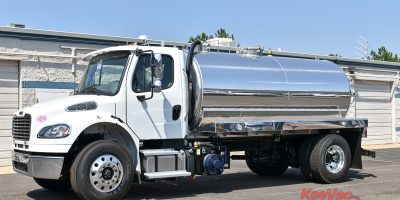
New grease builds are in production. Ask for current lead times.
View our Customer Units gallery to see builds we’ve delivered.
What Is a Grease Trap Truck?
A grease trap truck is a vacuum truck built to pump fats, oils, and grease (FOG), food solids, and wastewater out of restaurant and commercial kitchen grease traps and interceptors. It holds the waste in a sealed tank and hauls it to an approved disposal or processing facility.
Also called a grease truck, grease pump truck, grease vacuum truck, or grease collection truck.
Grease trap service companies, septic contractors adding grease routes, municipalities, and waste haulers all run them. For a closer look at the job itself, see how grease trap cleaning with vacuum trucks works on a real route.
How Does a Grease Trap Truck Work?
A grease trap truck works by using a vacuum pump to create negative pressure inside a sealed tank, which pulls grease and wastewater up the suction hose. Here’s a typical grease pump truck stop from start to finish:
- Park at the trap and connect the suction hose to a 3″ or 4″ inlet.
- The vacuum pump pulls air out of the tank, creating negative pressure.
- Grease, solids, and water are pulled up the hose into the aluminum tank, with a primary shutoff protecting the pump.
- The operator watches the fill level through the rear compartment sight eyes.
- The truck hauls the load to the disposal site and offloads through the 4″ or 6″ rear dump.
Read the full guide: what a grease tank truck is and how it handles FOG.
Grease Trap Truck Specifications
Every grease vacuum truck we build starts from a proven, continuous-duty package, then gets tuned to your route volume, disposal frequency, and chassis. Here are the core specs and options:
Custom Grease Truck Builds
Grease work is different from septic work: thicker material, tighter access, more frequent stops. Our team specs the tank size, inlet and dump configuration, and pump package to your route volume, disposal frequency, and chassis platform. Looking for a fully tailored configuration? Start here with our Custom Builds.
Grease Trap Truck vs. Septic Truck: What’s the Difference?
A grease trap truck and a septic truck use the same vacuum principle, but a grease trap truck is set up for thick FOG, frequent restaurant stops, and tight access, while a septic truck is set up for fewer, larger pumps of septage.
Some operators run both on one truck, like our 2,500-gallon Freightliner grease/septic build. If most of your work is septage, compare our full septic trucks.
What Size Grease Trap Truck Do I Need?
The right grease trap truck size depends on your route volume, stops per day, and distance to your disposal site. Dense city routes with tight access usually favor a smaller tank that’s easier to maneuver. Longer routes usually favor a larger tank, so you make fewer disposal trips. Our team matches capacity to how your routes actually run.
Not ready for a full truck? Consider these options:
- Grease slide-in units: a slide-in vacuum tank that turns a truck you already own into a grease pumper for new or small routes.
- Small grease pump-out carts: a compact option for very small jobs where a truck is more than you need.
Pump Packages Matched to Grease Trap Service
The right pump is critical for any grease pump truck. We match pump style, performance, and controls to your chassis and stop frequency.
- Top-tier pump brands including Masport, Fruitland, Jurop, and NVE
- Rotary vane & tri-lobe blowers for dependable suction and discharge
- Inline vacuum and pressure relief systems for safer operation
- User-friendly controls (in-cab switches or water-resistant switch box options)
- Valve heaters for cold climates and jetters available upon request
Need a compliance baseline for your fleet? Before your truck hits the road, review our DOT inspection checklist and the grease trap truck compliance requirements you should know.
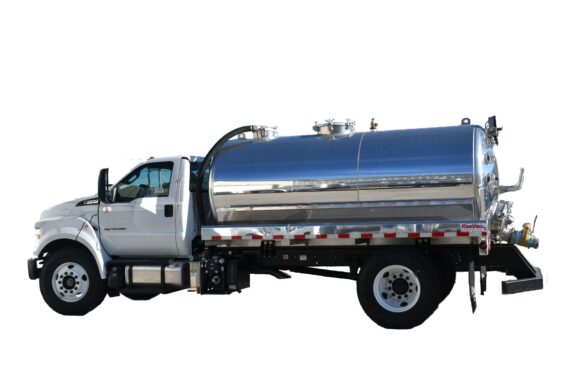
Grease Truck Parts, Maintenance and Support
Keep your route truck running strong long after delivery. Our team supports every build we sell, and you’ll talk to real people who know your equipment:
- Parts Department: fast parts guidance from Ronnie, Jules or Jesse.
- Parts Request: tell us what you need, and we’ll track it down.
- Truck Maintenance: upkeep guidance to cut downtime between routes.
- Custom Builds: upgrades and custom configurations as your routes grow.
- Financing: financing options for new route trucks and fleet additions.
Why Choose KeeVac for Your Grease Trap Truck Needs?
KeeVac Industries delivers grease collection trucks built for real-world routes: durable tanks, smart layouts, strong safety features, and pump packages selected for consistent performance. Whether you are adding a new grease trap truck or upgrading your fleet, we will help you spec a build that reduces downtime and supports long-term growth.
Grease Trap Truck FAQs
Quick answers to help you choose the right grease trap truck package.
What is a grease trap truck used for?
What size grease truck do I need?
How much does a grease trap truck cost?
Do you need a CDL to drive a grease truck?
Can one truck pump both grease traps and septic tanks?
What pump brands do you offer for grease trucks?
Can I finance a grease trap truck?
How long does a custom grease truck build take?
Find Your Next Grease Truck
See the grease trap trucks for sale above, or call (303) 789-9440 to talk through your build with a real person. Share your tank size, chassis, and route details, and we’ll put together a grease truck package that fits the way you work.
Shop Now
Browse every KeeVac truck and slide-in in stock, from grease/septic service trucks to portable restroom and pickup and delivery trucks.