How Does a Septic Tank Truck Work? A Step-by-Step Guide
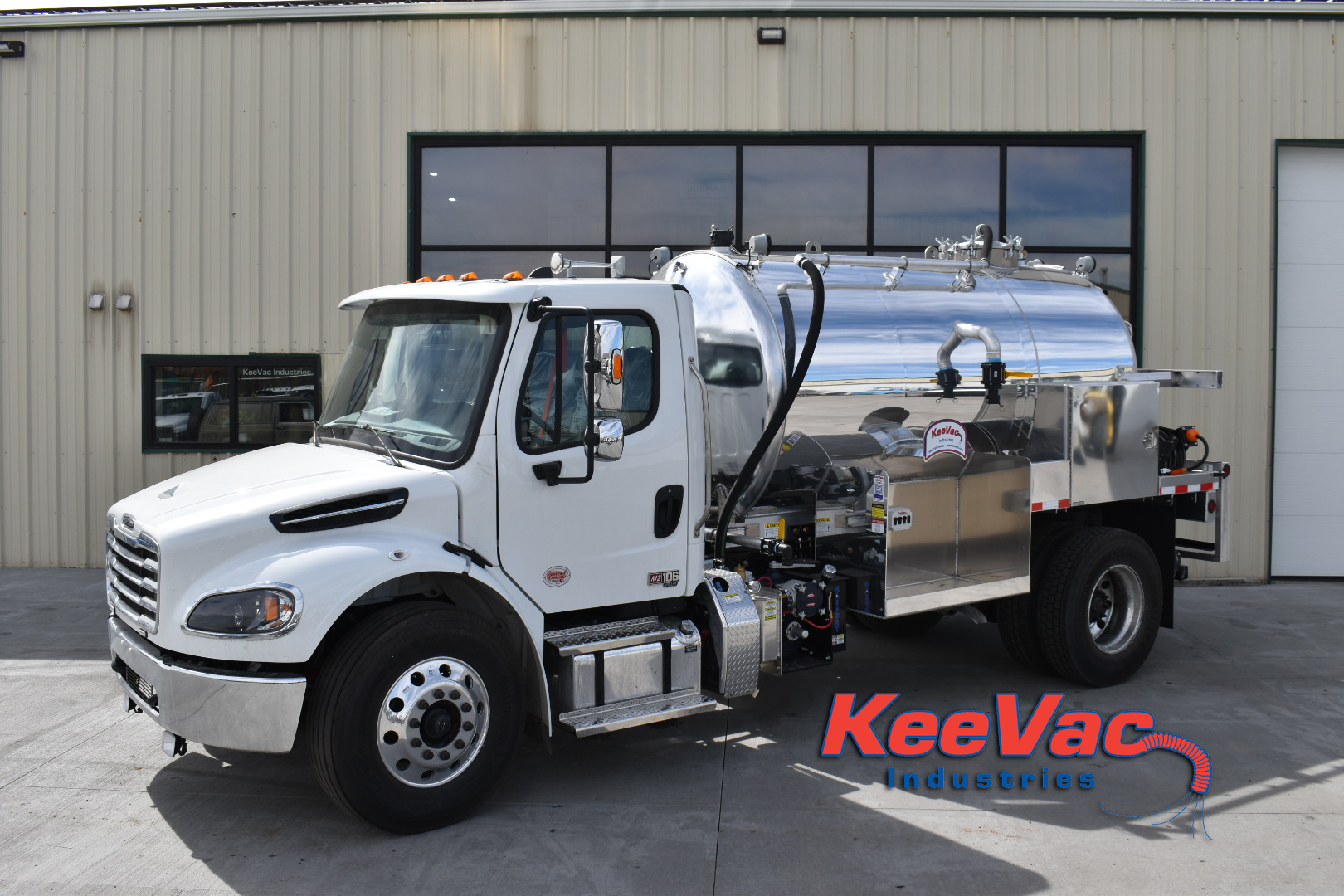
If you have ever watched a pumper truck empty a buried tank in minutes, you may have wondered how does a septic tank truck work. A septic truck does not push waste the way a garden pump pushes water. A vacuum pump removes air from a sealed tank, and ordinary atmospheric pressure pushes the waste up the hose and into the truck. That simple principle, paired with the right valves, hoses, and safety devices, lets one operator empty a septic tank, a portable toilet, or a grease trap cleanly and safely.
Septic trucks are also called septic pump trucks, septic pumper trucks, or septic vacuum trucks, and they handle the work that keeps buried systems healthy. According to the U.S. Environmental Protection Agency, a septic tank is a buried, water-tight container, usually made of concrete, fiberglass, or polyethylene, that lets solids settle into sludge while oil and grease float to the top as scum. Those layers build up over time. A septic truck is the equipment that removes them and hauls them away for proper treatment.
What Does a Septic Truck Pump Out?
The same core hardware can serve several kinds of customers, which is why one truck often earns its keep across many job types. A septic truck routinely empties:
- Residential and commercial septic tanks, including the sludge and scum layers that settle over years of use
- Holding tanks and cesspools that have no drainfield connection
- Portable toilets and restroom trailers, which many operators service with dedicated portable restroom service trucks that carry separate waste and fresh water tanks
- Grease traps and interceptors, where thick fats call for grease trap pumping equipment built to move heavy material
- Sumps, pits, and industrial wet wells that collect liquid waste on commercial and municipal sites
Because the jobs vary so much, tank capacity, hose reach, and pump size are the specifications that decide how productive a truck will be on a typical route.
The Vacuum Principle Behind a Septic Truck
Suction is not really a pulling force. When the vacuum pump removes air from the tank, the pressure inside drops below the pressure of the air outside. The atmosphere then pushes on the surface of the waste, and the waste rises through the hose toward the lower pressure. The pump never has to touch the waste to move it.
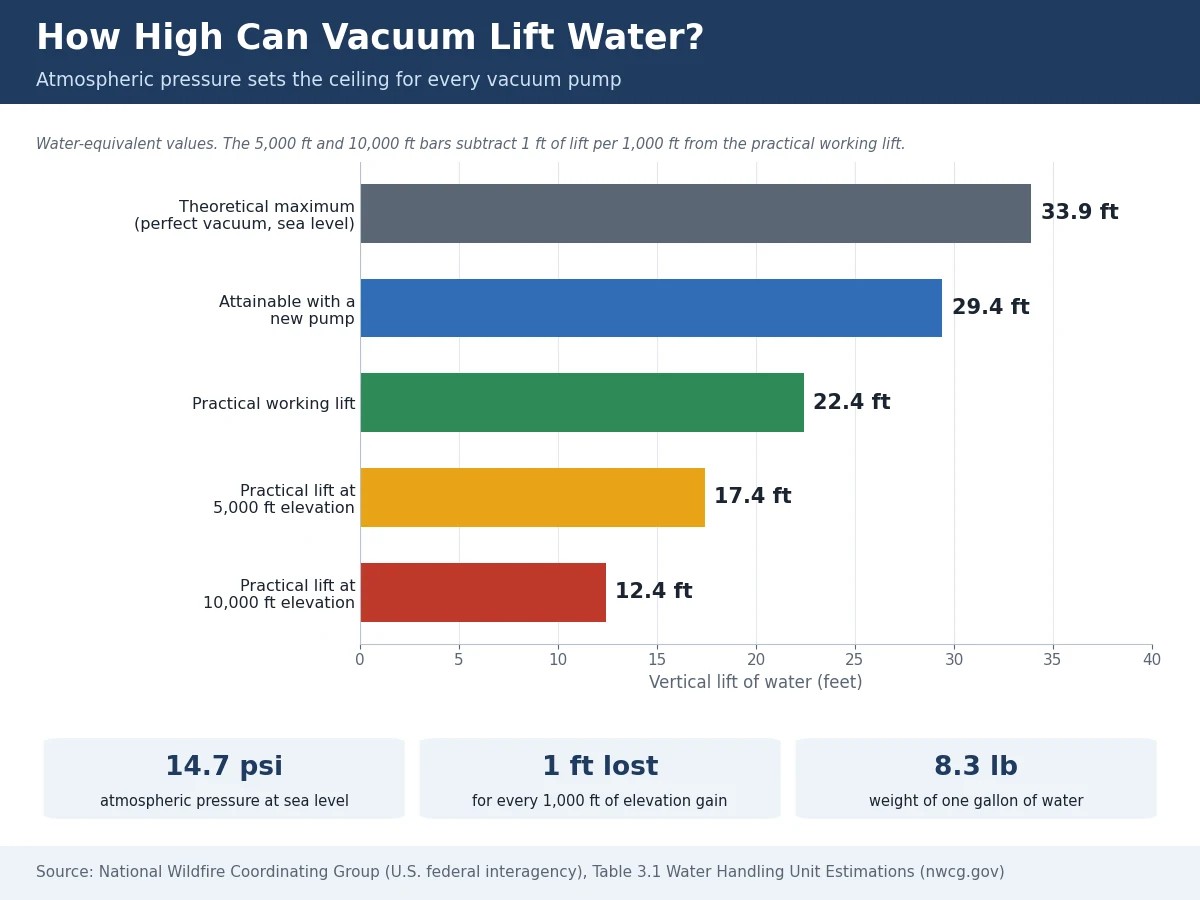
Source: National Wildfire Coordinating Group, Table 3.1 Water Handling Unit Estimations
Atmospheric pressure is about 14.7 psi at sea level, and that pressure can support a column of water roughly 33.9 feet tall in a perfect vacuum. Real equipment does not reach that number. federal training tables written for water drafting put the attainable lift of a new pump at about 29.4 feet and practical working lift at about 22.4 feet. The same tables show that each inch of mercury on a vacuum gauge equals about 1.13 feet of lift, and that lift drops by about one foot for every 1,000 feet of elevation gain. Those values are for water, but the physics is identical for a septic truck.
The takeaway for operators is simple. Keep the truck as close to the tank as possible, keep hose runs short, and keep every coupling airtight. Each extra foot of vertical lift and each small air leak costs you vacuum and slows the job.
How Does a Septic Tank Truck Work Without a Liquid Pump?
Most septic trucks rely on a vacuum pump alone. The pump pulls vacuum on the sealed tank, the intake valve opens, and waste flows in through the hose. Two protective devices keep that process safe for the equipment. An overfill shutoff, often a float valve, closes the intake when the tank is full, and a moisture trap or separator keeps liquid from reaching the pump.
Unloading works in one of two ways. The operator can open the rear outlet valve and let the load drain by gravity, or reverse the pump with a four-way valve so it pushes air into the tank. That pressure forces the load out through the discharge hose at the disposal site. The same pump handles both jobs, which keeps the system simple and dependable.
Septic Truck Components and What Each One Does
Every part of a septic truck either creates vacuum, holds waste, controls flow, or protects the operator. Here is how the major components fit together and what to check on each one.
| Component | What it does | What to check |
|---|---|---|
| Vacuum pump | Removes air from the tank to create suction | Oil level, vane condition, and unusual noise or heat |
| Storage tank | Holds waste until it reaches a disposal site | Lid seals, welds, baffles, and interior condition |
| Hoses and reels | Carry waste from the source to the tank | Cracks, soft spots, kinks, and reel operation |
| Valves and couplings | Control flow and keep the system airtight | Gaskets, handle action, and leaks at every joint |
| Overfill shutoff and moisture trap | Protect the pump from liquid carryover | Float movement and trap drainage after each job |
| Pressure and vacuum relief valve | Prevents the tank from over-pressurizing or over-vacuuming | Spring action and clear, unobstructed ports |
| PTO or hydraulic drive | Powers the pump and accessories from the chassis | Engagement, fluid level, and hose condition |
| Chassis and powertrain | Carries the tank, pump, and a full load of waste | Axle ratings, brakes, tires, and engine service |
The Vacuum Pump
The pump is the heart of the system. Rotary vane and liquid ring designs are the two most common, and both create the pressure difference that moves waste. Pump size is rated in cubic feet of air per minute, and a larger pump fills the tank faster, provided the hoses, valves, and chassis can support it. Each pump comes with a maintenance schedule from its manufacturer, so keep the pump and tank operating manuals close to the truck for reference.
Storage Tank Materials
Tanks are commonly built from aluminum, steel, or polyethylene. Aluminum is light and corrosion resistant, which leaves more of the chassis rating available for payload. Steel is strong and often used on larger builds, though it adds weight and needs protection against corrosion. Poly tanks are light but are limited in capacity. Internal baffles reduce liquid surge while the truck is moving, which helps with stability and braking.
Hoses, Valves, and Safety Devices
Hoses connect the tank to the waste source, and hose reels make storage and deployment quick. Valves and couplings must seal tightly because any leak reduces vacuum. Safety devices matter just as much. Pressure and vacuum relief valves protect the tank from damage if pressure or vacuum goes beyond its design limits, and spill containment and emergency shutoffs protect the operator and the job site.
Chassis and Powertrain
A full tank is heavy, so the chassis has to be matched to the load. Ford, Chevrolet, Ram, International, Peterbilt, Freightliner, Mack, Isuzu, and Kenworth chassis are all common choices, and the right one depends on tank size, daily mileage, and axle ratings. A strong powertrain also keeps the pump running at the right speed through the power take-off.
|
Shopping for a septic truck? KeeVac builds aluminum septic trucks in stock and custom configurations. Compare tank sizes, pump packages, and chassis options, then request a quote built around your routes.
|
How Does a Septic Tank Truck Work Step by Step
A typical pump-out follows the same order every time. Skipping a step usually shows up later as lost vacuum, a spill, or a safety problem.
- Position the truck. Park as close to the tank as is safe, set the parking brake, and engage the power take-off that drives the pump.
- Uncover and inspect. Open the access lid and check the tank condition and the scum and sludge layers before pumping starts.
- Check the air. Test for hazardous gas before and during the job, and stay out of the tank at all times.
- Connect the hose. Attach the hose to the intake valve, confirm the couplings are tight, and place the hose end in the tank.
- Build vacuum. Start the pump, let the gauge climb, and open the intake valve so waste flows into the truck.
- Break up the layers. Work the hose through the tank so settled solids and floating scum are drawn out along with the liquid.
- Monitor the load. Watch the level indicator and sight glass so the tank is never overfilled.
- Secure and transport. Close the valves, reel in the hose, secure the lid, and haul the load to a licensed treatment or disposal facility.
- Unload. Discharge by gravity or by pressure at the disposal site, then rinse the hose and tank as required.
What Happens Inside the Tank During a Pump-Out
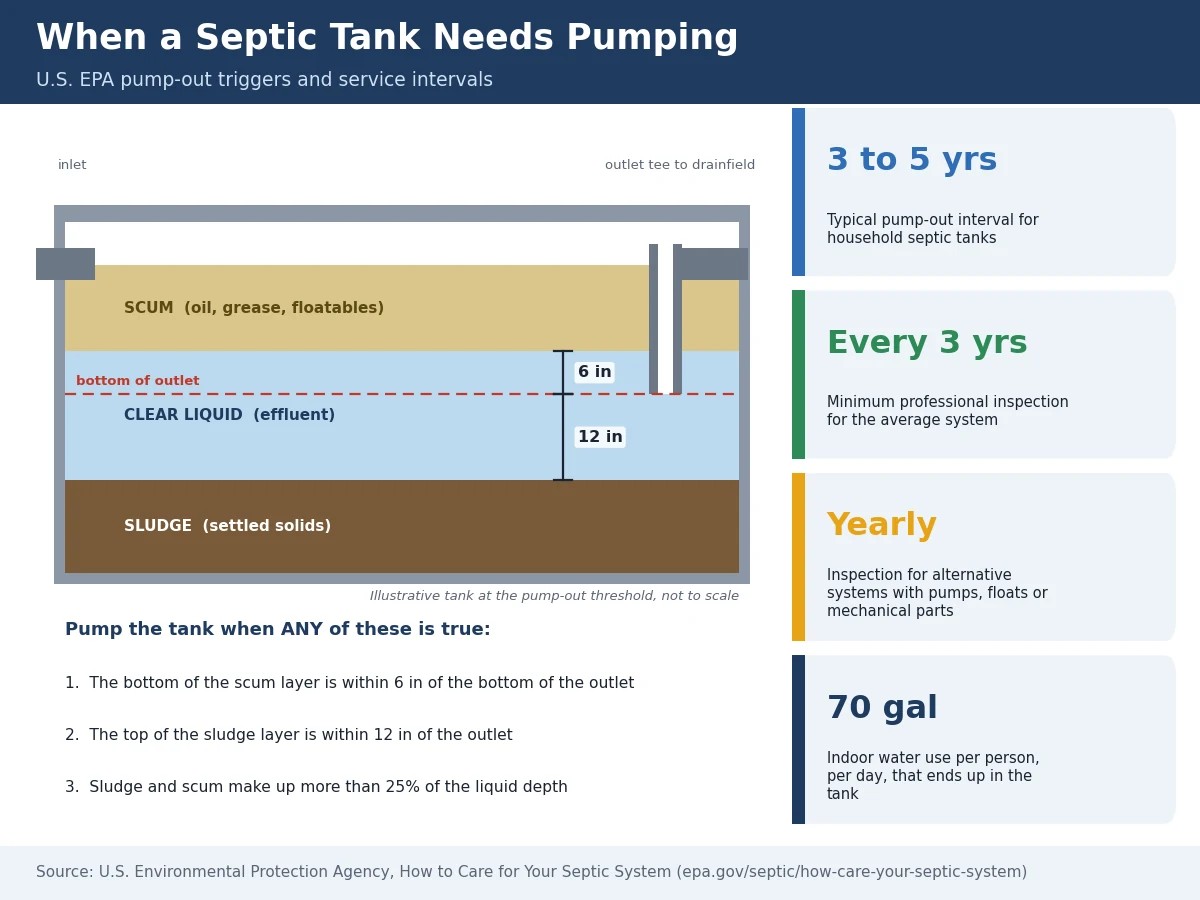
Source: U.S. Environmental Protection Agency, How to Care for Your Septic System
The tank is divided into three working layers: scum on top, clear liquid in the middle, and sludge on the bottom. A T-shaped outlet keeps scum and sludge from traveling into the drainfield. When either layer climbs too high, solids can escape toward the drainfield and clog it. EPA septic system care guidance says a tank should be pumped if the bottom of the scum layer is within six inches of the bottom of the outlet, if the top of the sludge layer is within 12 inches of the outlet, or if more than 25 percent of the liquid depth is sludge and scum.
Household septic tanks are typically pumped every three to five years, and the average system should be inspected at least every three years. Household size, total wastewater, solids in the wastewater, and tank size all change that schedule. A single leaking toilet can add as much as 200 gallons of water per day, which is one reason tanks fill faster than owners expect.
Safety on the Job: Gas, Confined Spaces, and Pressure
Waste breaks down in a sealed tank, and one of the gases it produces is hydrogen sulfide. It smells like rotten eggs at very low levels, but smell is not a reliable warning because the gas can deaden the sense of smell as concentrations rise.
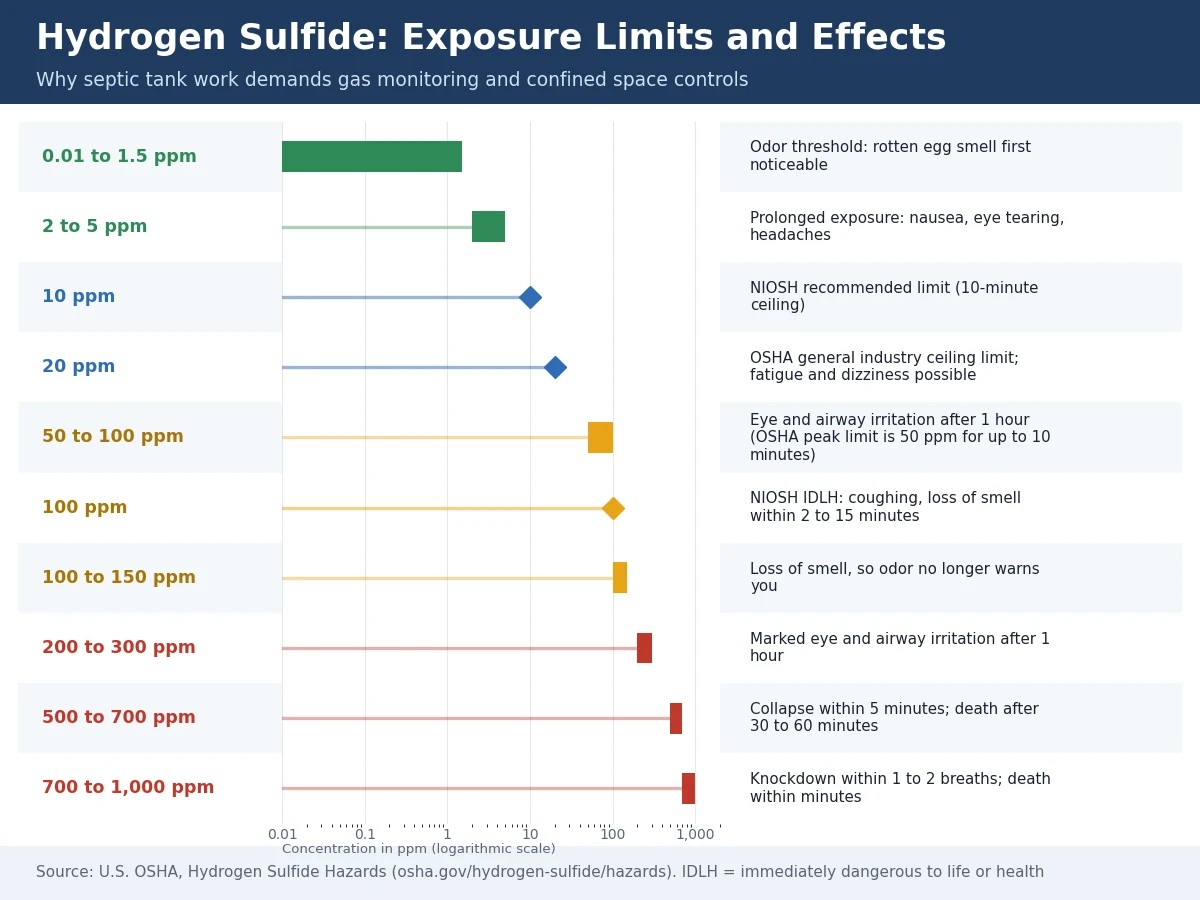
Source: U.S. OSHA, Hydrogen Sulfide Hazards
The OSHA hydrogen sulfide exposure data shows how quickly the risk escalates. NIOSH recommends a 10 ppm ceiling over 10 minutes, and OSHA sets a general industry ceiling of 20 ppm. At 100 ppm the gas is immediately dangerous to life or health, and between 100 and 150 ppm the sense of smell can disappear altogether. At 700 ppm and above, a worker can collapse within one or two breaths. OSHA also notes that hydrogen sulfide is flammable and explosive in air between 4.3 and 45 percent.
That is why pump-outs are done from outside the tank. The OSHA permit-required confined space standard, 29 CFR 1910.146 requires employers to evaluate their workplaces to determine whether spaces are permit-required confined spaces, and a tank that holds waste gas is a space where entry should never be improvised. Good operating habits include:
- Wearing a personal gas monitor for the entire job
- Keeping ignition sources away from the tank opening
- Never entering a tank to clear a blockage or retrieve a dropped tool
- Confirming the relief valve and overfill shutoff work before every shift
- Keeping spill containment supplies on the truck
Choosing a Septic Truck: Tank Size, Weight, and Configuration
A septic truck is only as productive as its tank, pump, and chassis allow. Bigger tanks mean fewer trips to the disposal site, but a full tank is also heavy, and every gallon counts against the chassis rating. Buyers who run residential routes often start with a mid-size tank, and shops that need to reach tight sites may prefer a smaller unit. KeeVac’s aluminum septic pump truck builds cover that range with stock and custom tank sizes.
Plan weight before you plan capacity. One gallon of water weighs about 8.3 pounds, and a tank full of septage should be treated as at least that heavy. Here is the water-equivalent weight of a full load at common tank sizes.
| Tank size | Water-equivalent weight of a full load | Typical mounting |
|---|---|---|
| 300 gallons | 2,490 lb | Pickup bed slide-in unit |
| 600 gallons | 4,980 lb | Pickup bed slide-in unit |
| 800 gallons | 6,640 lb | Pickup bed slide-in unit or light-duty chassis |
| 1,200 gallons | 9,960 lb | Slide-in unit or medium-duty chassis |
| 1,500 gallons | 12,450 lb | Slide-in unit or medium-duty chassis |
| 2,500 gallons | 20,750 lb | Medium-duty or heavy-duty chassis |
| 3,000 gallons | 24,900 lb | Heavy-duty chassis |
Weights are calculated at 8.3 pounds per gallon. Always confirm the final weight against the chassis gross vehicle weight rating.
Smaller operations and crews that need a flexible work truck often choose slide-in vacuum units for pickup beds, since the tank and pump can be removed when the truck is needed for other work.
Custom Configurations
No two routes are identical. Hose length, reel placement, pump size, compartment layout, and tool storage can all be tailored to the way your crew actually works. If a stock configuration is close but not exact, custom-built vacuum equipment lets you match the truck to your jobs instead of changing your jobs to fit the truck.
Budgeting for a Septic Truck
Truck cost depends on tank size, tank material, pump package, and chassis. Many buyers spread that cost over time, and equipment financing options can keep a new truck affordable while it starts earning on day one. When you compare quotes, compare the same tank size, pump rating, and chassis so you are judging like with like.
Maintenance Habits That Keep a Septic Truck Pumping Strong
Most vacuum problems start as small air leaks or worn parts. A short, consistent routine catches them early and protects the pump, which is usually the most expensive component to repair.
- Before each shift: check pump oil, inspect hoses and gaskets, test the overfill shutoff, and confirm the relief valve moves freely
- After each job: drain the moisture trap, rinse hoses and the tank as needed, and wipe down valves and couplings
- Weekly: grease fittings, check the PTO and hydraulic fluid, and inspect lid seals and tank welds
- Seasonally: review the pump manufacturer’s service schedule, replace worn vanes or seals, and protect the truck against freezing weather
Our vacuum truck maintenance resources outline inspection routines you can adapt to your own fleet.
When a hose, gasket, valve, or pump component does wear out, replacing it quickly keeps the truck earning. Replacement vacuum pump and valve parts are available for the equipment KeeVac builds, so downtime stays short.
Septic Truck FAQs
How does a septic truck suck waste out of a tank?A vacuum pump on the truck removes air from a sealed storage tank. Normal atmospheric pressure then pushes the waste from the septic tank up the hose and into the truck’s tank. The pump moves air, not waste, which is why the vacuum has to stay airtight from the hose connection to the tank lid. |
What is the difference between a septic truck and a vacuum truck?A septic truck is a vacuum truck set up for septage. Both use a vacuum pump, a sealed tank, hoses, and valves. Septic configurations focus on tank size, hose reach, and the controls needed to pump out and haul residential and commercial septic tanks, and the same hardware can often be configured for portable toilets and grease traps. |
How often should a septic tank be pumped?The U.S. EPA says household septic tanks are typically pumped every three to five years, and the average system should be inspected at least every three years. Household size, total wastewater, solids in the wastewater, and tank size all change the schedule. A tank should be pumped when the scum layer is within six inches of the bottom of the outlet, when the sludge layer is within 12 inches of the outlet, or when sludge and scum exceed 25 percent of the liquid depth. |
How high can a septic truck lift waste?Atmospheric pressure limits vertical lift. At sea level the theoretical maximum for water is about 33.9 feet, a new pump can attain roughly 29.4 feet, and practical working lift is about 22.4 feet. Lift drops about one foot for every 1,000 feet of elevation, so shorter hose runs and lower lift generally pump faster. |
Is septic pumping dangerous for operators?It can be if the right procedures are skipped. Septic tanks can release hydrogen sulfide, which OSHA lists as immediately dangerous to life or health at 100 ppm and which can paralyze the sense of smell at 100 to 150 ppm. Operators should work from outside the tank, use a personal gas monitor, and follow confined space rules. |
Which tank material is best for a septic truck?Aluminum is popular because it is light, resists corrosion, and leaves more payload for waste on a given chassis. Steel is strong and common on larger builds but weighs more, and poly tanks are light but limited in size and strength. The best choice depends on tank capacity, chassis rating, and how many jobs the truck runs each week. |
Find the Right Septic Truck for Your Business
Now that you know how a septic truck works, the next step is matching the right tank, pump, and chassis to your routes. KeeVac’s full equipment lineup covers septic, portable restroom, grease, and custom builds, and every unit is configured around the way you work.
Have questions about spec choices, delivery, or financing? You can talk with a truck specialist and describe your jobs, and the team will help you spec a truck that fits.
|
Ready to spec your septic truck? Tell us about your tank size, routes, and chassis preference, and we will build a quote around your operation.
|