What Is a Grease Tank Truck? | FOG Collection Trucks Explained
In the waste management industry, few pieces of equipment carry as much day-to-day operational weight as a grease tank truck. These purpose-built vehicles are engineered specifically to collect, transport, and responsibly dispose of fats, oils, and grease (FOG) waste from restaurant grease traps, interceptors, and commercial food service facilities. Without them, the buildup of FOG in municipal sewer systems would lead to blockages, environmental violations, and costly infrastructure damage. At KeeVac Industries, we manufacture custom grease trucks built to handle the real-world demands of FOG collection and grease trap servicing operations of every size.

What Is a Grease Tank Truck?
A grease tank truck is a specialized vacuum truck designed to remove accumulated fats, oils, and grease from commercial grease traps, grease interceptors, and related collection points at food service establishments. Unlike standard vacuum trucks used for septic or liquid waste, a grease tank truck is built around the specific viscosity and chemical characteristics of FOG waste, which requires different pump ratings, tank coatings, and hose configurations than standard wastewater applications.
The term is used interchangeably with grease vacuum truck, FOG truck, and grease collection truck, though all refer to the same core function. Restaurants, hotels, food processing plants, and cafeterias are all regular customers for grease trap servicing, making this a high-demand, recurring-service segment of the waste hauling industry.
Understanding what sets a grease tank truck apart from other vacuum trucks starts with looking at its core components and how they work together during a typical service call.
Core Components of a Grease Tank Truck
Every grease truck is built around a set of specialized components that allow it to handle dense, viscous FOG waste efficiently. These include:
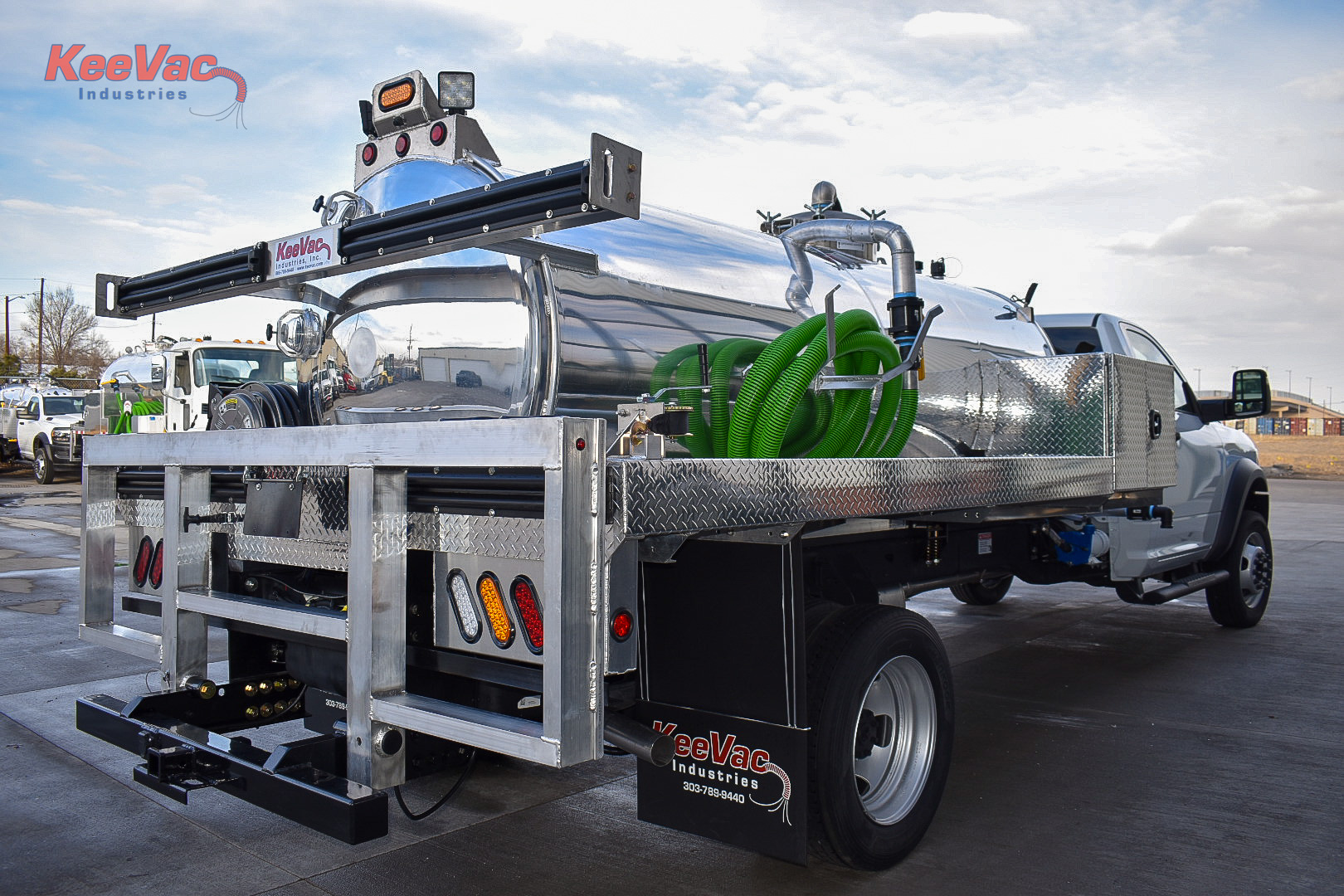
- The Storage Tank: Typically constructed from aluminum or steel, the tank is coated or treated to resist the corrosive properties of grease and acidic waste. Tank sizes commonly range from 1,000 to 4,000 gallons depending on the intended route volume and chassis capacity.
- The Vacuum Pump System: A high-performance pump capable of generating enough suction to extract thick grease from traps and interceptors. The pump rating must account for the viscosity of FOG, which is significantly higher than water or standard wastewater.
- Hose and Reel System: Extended-reach hoses allow technicians to access grease traps without moving the truck. Reel systems make deployment and retraction faster, reducing labor time per stop on a service route.
- Cleanout and Discharge System: A controlled discharge system allows the collected FOG waste to be offloaded safely at approved rendering or disposal facilities. Some operators also use collected grease as a feedstock for biodiesel production, so discharge flexibility matters.
- Pressure Relief Valves: Safety-critical components that protect the tank and pump system during operation. Learn more about the pressure relief valves KeeVac uses on its builds.

How a Grease Tank Truck Works: The Full Service Workflow
Knowing what equipment a truck carries is one thing. Understanding the full operational workflow helps grease trap service companies evaluate whether their current truck setup is actually efficient or leaving time and money on the table.
Step-by-Step: How a Grease Tank Truck Handles FOG Waste
- Arrival and Setup: The truck pulls up to the service location, typically a commercial kitchen loading area or designated access point. The operator connects the appropriate hose to the grease trap or interceptor access point.
- Vacuum Engagement: The vacuum pump engages and begins drawing FOG waste through the hose and into the onboard tank. Depending on trap size and how full it is, extraction can take anywhere from a few minutes to over an hour.
- Trap Inspection and Cleaning: Beyond simple pumping, technicians often inspect baffles, lids, and inlets for damage or buildup. Thorough cleaning reduces service callback frequency and keeps restaurant clients compliant with local FOG ordinances.
- Hose Retraction and Departure: Once the trap is cleaned and the hose is secured, the truck is ready for the next stop. Route efficiency depends heavily on hose reel speed and how quickly the truck can be made road-ready between jobs.
- Waste Disposal or Rendering: Collected FOG is transported to an approved facility for disposal, or in some cases to a rendering plant where it is converted into biodiesel or yellow grease for resale. The EPA’s water protection guidelines govern how FOG must be managed to prevent sewer system contamination.
The efficiency of steps one through four directly impacts how many stops a crew can complete in a single day, which is why truck configuration and component quality have a direct line to profitability in a grease collection operation. For a deeper look at what vacuum trucks bring to this process, read our post on how vacuum trucks make grease trap cleaning easier.
Grease Tank Truck vs. Standard Vacuum Truck: What Is the Difference?
Many operators new to FOG collection ask whether a standard septic or industrial vacuum truck can do the job. The short answer is: sometimes, but not ideally. Here is why grease-specific builds exist:
| Feature | Grease Tank Truck | Standard Vacuum Truck |
|---|---|---|
| Tank coating/lining | FOG-resistant treatment | General purpose |
| Pump CFM rating | Optimized for viscous material | Optimized for water/wastewater |
| Hose material | Grease-rated, high-temperature tolerant | Standard vacuum hose |
| Discharge configuration | Rear or side discharge with flow control | Varies by application |
| Best use case | Restaurant FOG, grease interceptors | Septic, industrial liquid waste |
Choosing the wrong truck for grease collection not only slows down service times but can result in pump wear, tank degradation, and premature equipment failure. When your truck is built for the job from the chassis up, the difference is noticeable from day one.
What Services Do Grease Tank Trucks Provide?
A grease collection truck is a revenue-generating asset for multiple types of service businesses. The most common applications include:
- Restaurant and food service grease trap pumping: The most frequent use case. Restaurants are often required by local municipalities to schedule regular trap cleanings, creating a built-in recurring service demand.
- Commercial interceptor cleaning: Large-scale grease interceptors at hotel kitchens, hospitals, and institutional food service operations require high-capacity trucks for efficient servicing.
- Yellow grease collection for biodiesel: Used cooking oil and yellow grease recovery operations use similar trucks and routing models to traditional FOG collection, and many operators run both under the same fleet.
- Emergency FOG removal: Blockages, sewer backups caused by FOG accumulation, and municipal response situations all call for rapid grease vacuum truck deployment.
For a full breakdown of what these trucks are used for in the field, see our dedicated post on services grease tank trucks provide.
Buying a Grease Tank Truck: What to Evaluate Before You Invest
Whether you are starting a new FOG collection route or expanding an existing fleet, purchasing a grease truck is a significant capital decision. Here are the critical factors that should drive your evaluation:
What Is a Grease Tank Truck Build That Will Last?
The longevity of a grease truck comes down to three things: chassis quality, tank construction, and pump reliability. At KeeVac, we build on new and used chassis from manufacturers including Ford, Chevrolet, Ram, International, Peterbilt, Freightliner, Mack, Isuzu, and Kenworth. Tank material selection, either aluminum for weight savings or steel for maximum durability, should be matched to your payload requirements and terrain.
Tank Capacity
Tank capacity directly determines how many stops you can complete before needing to offload. For operators running tight urban routes with frequent disposal access, smaller tanks (1,000 to 2,000 gallons) keep gross vehicle weight lower and improve fuel efficiency. For long-haul routes with limited disposal options, larger tanks in the 3,000 to 4,000 gallon range reduce trips to the rendering or disposal facility and improve daily yield per truck.
Pump Configuration
The pump is the heart of any grease vacuum truck. The Masport pump systems used by KeeVac are well-regarded in the industry for their output, reliability, and serviceability. Matching pump CFM to your typical trap sizes and grease viscosity prevents underperformance on heavy jobs and reduces unnecessary pump strain on lighter ones.
Regulatory Compliance
Your truck must comply with federal DOT weight and safety standards as well as any state-level environmental regulations governing the transport of FOG waste. KeeVac builds are designed with compliance in mind at every stage of the fabrication process.
Pricing and Financing
Investment in a purpose-built grease truck varies based on tank size, chassis, and optional configurations. For a detailed breakdown, see our post on how much a grease trap truck costs, or explore financing options available through KeeVac to structure a payment plan that fits your cash flow.
Why KeeVac Industries for Your Grease Truck?
KeeVac Industries has built a reputation in the vacuum truck manufacturing industry for producing equipment that holds up under real working conditions. Our grease truck builds reflect years of direct feedback from FOG collection operators, which shapes everything from tank geometry to hose reel placement to discharge valve positioning.
Every truck that leaves our facility is built to a consistent standard and backed by our parts department, which stocks components to keep your truck operational without long lead times. Browse our full vacuum truck product lineup to see grease trucks alongside our septic, portable restroom, and slide-in unit options, or go directly to our grease truck page for model-specific information and current inventory.
Ready to talk specifics? Contact our team at KeeVac Industries to discuss tank sizing, chassis options, pump configurations, and lead times for your next grease truck build.
Frequently Asked Questions About Grease Tank Trucks
What is a grease tank truck used for?
A grease tank truck is used to collect, transport, and dispose of fats, oils, and grease (FOG) waste from commercial grease traps, interceptors, and food service establishments. It is a specialized vacuum truck built specifically for the viscosity and chemical properties of grease waste.
How is a grease truck different from a septic truck?
While both use vacuum systems, a grease truck is built with FOG-rated tanks, higher-viscosity pump configurations, and specialized hose materials suited to thick grease. Septic trucks are designed for wastewater and sewage, which have different flow characteristics and disposal requirements.
How much does a grease tank truck cost?
Pricing depends on tank capacity, chassis selection, and build configuration. Entry-level builds typically start in the $80,000 to $120,000 range, while fully loaded, high-capacity units can exceed $200,000. Visit our guide on grease trap truck pricing for a more detailed breakdown.
Can I customize a grease truck for my specific operation?
Yes. KeeVac Industries offers full customization including tank size, tank material (aluminum vs. steel), pump type, hose reel configuration, and optional features like safety rails and advanced discharge systems. Every build starts with understanding the specific demands of your route and operation.
What chassis options are available for grease trucks?
KeeVac builds grease trucks on both new and used chassis from Ford, Chevrolet, Ram, International, Peterbilt, Freightliner, Mack, Isuzu, and Kenworth. Chassis selection depends on payload requirements, route type, and budget.
Where can I see available grease trucks for sale?
You can browse current grease truck inventory on our available truck shop page, or reach out directly to our team for in-progress builds and custom order timelines.