If you’re planning to buy or upfit a vacuum truck, you already know the options can feel endless—and the stakes are high. The right rig boosts safety, productivity, and profitability; the wrong one ties up cash and causes avoidable downtime. This guide walks you through choosing the right vacuum truck for your work by aligning job type, budget, and operational constraints. We’ll break down core selection factors, compare the major truck types, highlight mistakes to avoid, and finish with a practical next step you can take today.
Factors to Consider When Choosing a Vacuum Truck
Selecting a vacuum truck is less about a single headline spec and more about fit. Start by mapping your real-world workloads, then validate the specs that will serve those jobs most efficiently. If you want the basics first, read our vacuum truck guide. Think in terms of:
What you’ll vacuum: Liquids, slurries, solids, grease, sludge, drilling mud, sewage, debris, or spoil.
Where you’ll work: Urban alleys, off-road job sites, long-haul routes, high-altitude regions, or residential neighborhoods with noise restrictions.
How often and how far you’ll travel: Frequent route work vs. occasional heavy industrial cleanup; short local trips vs. long regional loops.
Regulatory constraints: DOT weight limits, local noise ordinances, and environmental handling requirements.
Budget and lifecycle: Your upfront capex plus the total cost of ownership (fuel, maintenance, consumables, operator training, and resale value).
Below are the three most important spec groups to prioritize first.
Tank Size and Capacity
Capacity dictates productivity and compliance. Too small, and you’ll waste time on repeated dump runs. Too large, and you could pay for capacity you don’t use—or worse, run into weight limit issues that limit where you can travel.
Key considerations:
Typical load profile: Track what’s most common, not the rare outliers. Size for 80–90% of your expected jobs.
Material density: Heavier materials like sludge or drilling mud may fill out the legal weight limit before you reach volumetric capacity. Plan for weight before volume when loads are dense.
Tank material:
Aluminum is lightweight (helps payload and fuel economy) and corrosion resistant—great for many septic and non-caustic applications.
Carbon steel is durable and often more economical up front; it’s common for municipal and industrial use.
Stainless steel resists corrosion for harsh or caustic materials; it can be heavier and pricier, but may reduce long-term maintenance.
Baffles and surge control: Proper baffling improves vehicle stability and driver confidence, especially with partially filled tanks.
Offload configuration: Top vs. rear manways, valve sizing, and quick-connect fittings influence unload speed and job turnaround.
Pumping Power and Speed
Your pump system is the heart of the vacuum truck. Matching vacuum level, airflow, and duty cycle to your application determines how quickly you’ll complete jobs—and how often you’ll be down for repairs.
What to look at:
Pump type:
Rotary vane pumps are compact and reliable for many septic and light industrial jobs.
Roots-type blowers deliver higher airflow (CFM) and are commonly preferred for heavy industrial cleanup, hydro excavation debris, and applications requiring high performance.
Liquid ring pumps handle wet, corrosive environments well but may add complexity.
Vacuum and airflow:
Inches of mercury (inHg) indicates vacuum strength.
Cubic feet per minute (CFM) shows how quickly air moves. For dense or viscous material, you’ll need a robust vacuum; for larger hose runs and bulkier debris, airflow matters more. Many buyers balance both for versatility.
Filtration and separation: Multi-stage filtration (cyclone separators, primary/secondary shutoffs, final filters) protects pumps from ingesting liquids or solids. Better filtration extends pump life and lowers maintenance.
Cooling and duty cycle: Continuous heavy-duty operation generates heat. Look for designs with appropriate cooling and clear duty-cycle ratings for your workload.
Hydro excavation systems: If you’re considering hydro-ex, you’ll also need to evaluate water pump GPM and PSI, boiler output for winter work, and nozzle/jetting options for various soils.
Truck Chassis and Build Quality
A well-matched chassis is the foundation of safety, uptime, and long-term value.
Chassis essentials:
Gross Vehicle Weight Rating (GVWR) and axle ratings: The truck must safely carry the tank, the pump package, and a full load of material. Consider weight distribution with full and partial loads.
Wheelbase and turning radius: Tight urban routes or sewer alleys require maneuverability; off-road work may favor ground clearance and wheelbase stability.
Powertrain integration: Confirm power take-off (PTO) compatibility, transmission (automatic vs. manual), and torque for hilly routes or high-altitude regions.
Electrical and hydraulic provisions: Clean integration reduces troubleshooting and supports future accessories (lighting, safety systems, live hydraulics).
Build quality: Look for tidy plumbing, labeled electrical harnesses, accessible service points (filters, valves, sight glasses), and corrosion protection (e.g., coated frames, stainless fasteners where it counts).
Safety and ergonomics: Non-slip steps, handrails, hose storage, boom controls, emergency stops, backup cameras, and lighting all influence daily efficiency and incident reduction.
Different Types of Vacuum Trucks
Choosing the category that aligns with your core work is the fastest way to narrow the field. While many trucks can be customized for hybrid tasks, most fleets see the best ROI when a truck’s configuration closely matches its primary use case.
Hydro Excavation Trucks
Best for: Utility daylighting, trenching in congested corridors, cold-weather digging with heated water, and projects where traditional mechanical excavation risks damaging buried assets.
Defining features:
High-performance vacuum and filtration to capture slurry and spoils.
Water systems delivering controlled high-pressure/high-flow for soft digging. Cold climates often require boilers to heat water for winter excavation.
Hose/boom systems that reach utility easements or obstacles while keeping the truck safely positioned.
Buying tips:
Soil conditions drive specs. Clay and frozen ground may demand higher PSI, increased GPM, and boiler capacity.
Noise and neighborhood sensitivity. Urban hydro-ex jobs may require muffling and quieter blowers during early or late work windows.
Spoil management. Consider tank size, fast offload, and dewatering aids to keep crews productive.
Industrial Vacuum Trucks
Best for: Heavy-duty cleanup in plants, refineries, mills, and construction sites, handling dry and wet bulk materials, sludge, and debris.
Defining features:
High CFM blowers (often Roots-type) for long hose runs and bulk solids pickup.
Robust filtration and separators to protect the pump.
Heavy-duty tanks (often steel) with abrasion-resistant interiors depending on the material.
Buying tips:
Material variability. If your work ranges from fine powders to heavy slurries, ensure your system is versatile with appropriate hose sizes, valves, and nozzles.
Durability trumps all. Prioritize rugged build quality, reinforced mounts, and serviceability features; industrial environments are tough on equipment.
Compliance and safety. Evaluate grounding, spark arrestors (where required), confined space procedures, and clear labeling.
Septic Service Trucks
Best for: Residential and commercial septic pumping, grease trap service, and municipal route work.
Defining features:
Balanced vacuum and airflow via rotary vane or blower systems suited to liquids and light solids.
Tank configurations (aluminum or steel) sized for typical daily routes.
Route-friendly chassis with good turning radius, reliable braking, and comfortable cabs for long days.
Buying tips:
Right-size the tank. Consider average daily pulls, drive distances, and dump station availability to optimize route efficiency.
Grease trap readiness. If you service grease-heavy accounts, confirm pump and hose configurations can handle thicker material.
Neighborhood compatibility. Look for clean, professional presentation, low noise, and tidy hose storage—your truck is a rolling billboard.
Common Mistakes to Avoid
Buying a vacuum truck is a major investment. These pitfalls are common—and expensive—but easy to avoid with a little planning.
Overlooking Maintenance Costs
The purchase price is only the start. The total cost of ownership includes fuel, filters, oil, pump rebuilds, hoses and fittings, vacuum relief valves, tires, brakes, and unplanned downtime.
Avoid surprises by:
Forecasting parts and service. Ask for maintenance intervals for the pump, blower, water system, and filtration components. Get a parts list and pricing.
Evaluating accessibility. Can your techs reach filters, strainers, and shutoffs quickly? Minutes saved per service add up.
Spec’ing the right materials. A stainless or lined tank may cost more initially but save money if you haul corrosive material.
Training operators. Well-trained operators extend equipment life—proper warm-up/cool-down for blowers, regular checks of primary/secondary shutoffs, and correct use of relief valves.
Planning for downtime. What’s the vendor’s support model? Do they stock common parts locally? Is loaner equipment available?
Buying Without a Test Drive
A spec sheet can’t reveal how a truck feels on your routes. Test drives and live demos uncover dealbreakers you might otherwise miss.
What to validate:
Maneuverability: Can you fit into tight access points and cul-de-sacs?
Noise and vibration: Critical for residential work and operator comfort.
Control layout: Are valves, reliefs, hose reels, booms, and gauges intuitive and reachable?
Loading/unloading flow: Time your cycle from arrival to departure, including setup, vacuum time, and offload.
Real payload behavior: Drive with a representative load to confirm braking, stability, and acceleration under weight.
Ignoring Manufacturer Reputation
A vacuum truck isn’t just steel and horsepower—it’s a long-term relationship with the builder who supports you.
Do your homework:
Track record and specialization: Does the upfitter understand your industry segment (septic, hydro-ex, industrial)?
Build quality standards: Look for consistent welds, clean plumbing, labeled wiring, corrosion prevention, and documented QA procedures.
Support and parts availability: Ask about response times, tech support hours, and stocked components.
Customer references and case studies: Real-world feedback from fleets like yours is priceless.
Warranty clarity: What’s covered, for how long, and how claims are handled?
Bringing It All Together: A Practical Selection Framework
While your jobs are unique, most successful buyers follow a similar process. Here’s a simple framework you can adapt:
Define primary use cases. List your top five job types, typical material densities, average hose length, and access constraints.
Quantify route dynamics. Daily stops, miles driven, dump station proximity, and seasonal shifts (e.g., frozen ground for hydro-ex).
Set capacity targets. Choose tank size and pump performance to handle 80–90% of your workload in one pass.
Match the chassis. Validate GVWR, axle ratings, wheelbase, and PTO compatibility against your chosen tank and pump.
Pilot and iterate. Demo or rent a similar configuration if possible. Gather operator feedback and refine specs before you commit.
Plan lifecycle economics. Estimate fuel, maintenance, and residual value. Consider how modular the build is for future upgrades (boiler add-on, different hose reels, etc.).
Choose a partner, not just a product. Favor upfitters who consult, customize, and support you after delivery.
Real-World Scenarios: Matching Specs to Jobs
A few examples can help clarify choices:
Rural septic routes with long drives between stops: Favor larger aluminum tanks (to reduce dump runs), efficient rotary vane or blower, and a comfortable, fuel-efficient chassis with cruise control and driver aids.
Urban grease trap service: Opt for a maneuverable medium-duty chassis, strong vacuum with good filtration, compact hose storage, and quiet operation for night work.
Mixed industrial cleanup: Choose a heavy-duty steel tank, high-CFM blower, robust multi-stage filtration, and reinforced mounts for durability.
Year-round hydro excavation in cold climates: Specify higher GPM/PSI water systems, adequate boiler capacity, insulated lines, and reliable boom/hoses designed for winter conditions.
Operator Experience: The Hidden ROI
Many fleets underestimate how much operator experience influences job speed and equipment longevity. When reviewing builds, put yourself in the driver’s seat:
Are the gauges readable at a glance?
Are shutoffs and relief valves labeled and reachable?
Is there safe, organized storage for hoses, wands, nozzles, and PPE?
Does the lighting package support early mornings and evening callouts?
Are there training resources and quick-reference guides provided at delivery?
The smoother and safer the daily routine, the faster your crews work—and the longer your equipment lasts.
Budgeting and Financing Considerations
Vacuum trucks pay for themselves through utilization, but cash flow matters. Keep these points in mind:
New vs. used chassis: New often carries longer warranties and the latest safety/emissions features; used can be cost-effective if thoroughly inspected and supported by an experienced upfitter.
Right-sizing avoids overpaying. Don’t buy more capacity or horsepower than your routes require.
Standardization saves money. If you’ll add more trucks later, standardizing on hose sizes, fittings, and control layouts reduces training time and parts inventory.
Resale value: Well-known chassis brands, clean wiring/plumbing, and documented maintenance improve resale—bake that into your decision.
Safety and Compliance Essentials
Safety is a selection criterion, not a checkbox:
Back-up alarms and cameras, high-visibility lighting, and clear e-stop placement.
Confined space and lockout/tagout considerations for industrial environments.
Pressure and vacuum relief systems sized and set correctly.
Proper baffles and load management to maintain vehicle stability.
Documentation and placarding where hazardous materials are involved.
Noise controls for urban or nighttime operations.
Final Pre-Purchase Checklist
Before you sign:
Tank size/material matches your most common jobs and material densities.
Pump type and performance (vacuum + CFM) align with hose runs and viscosity.
Filtration, separators, and shutoffs protect the pump and simplify service.
Chassis GVWR, axles, and wheelbase are right for the load and routes.
PTO/hydraulics integrate cleanly; electrical is labeled and accessible.
Safety and ergonomics support efficient, low-risk operation.
Maintenance plans, parts availability, and warranty terms are clear.
You’ve test-driven (ideally with a representative load) and validated the workflow.
The builder’s reputation and after-sale support meet your expectations.
Common Pitfalls Recap (and How to Avoid Them)
Overlooking maintenance costs leads to budget shock—solve it with a realistic TCO plan, accessible service points, and operator training. Buying without a test drive can saddle you with maneuverability, noise, or workflow frustrations—solve it with demos and time-and-motion checks. Ignoring manufacturer reputation risks delays, poor fit, and limited support—solve it by partnering with proven upfitters who specialize in your type of work.
Ready to Move from Research to Results?
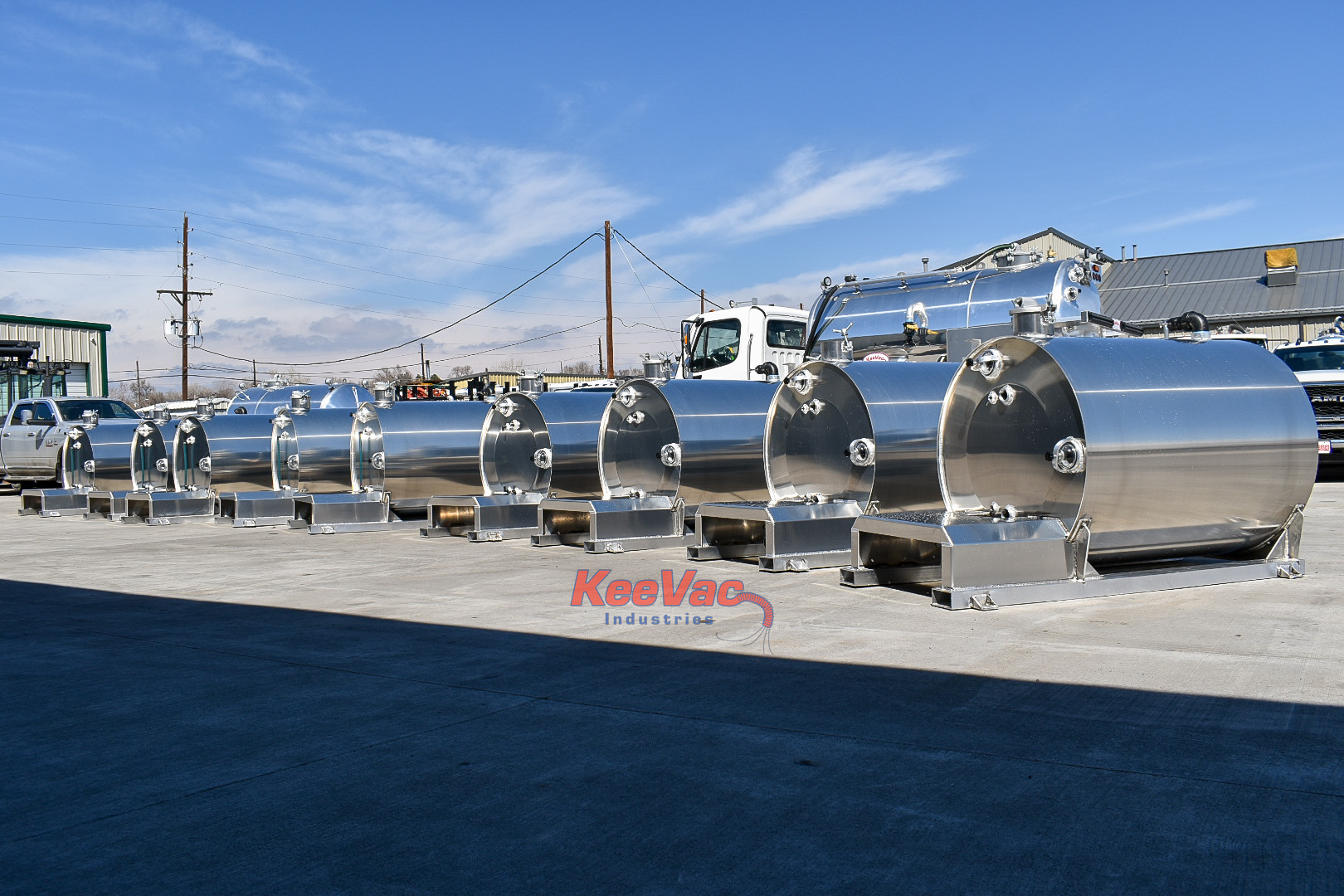
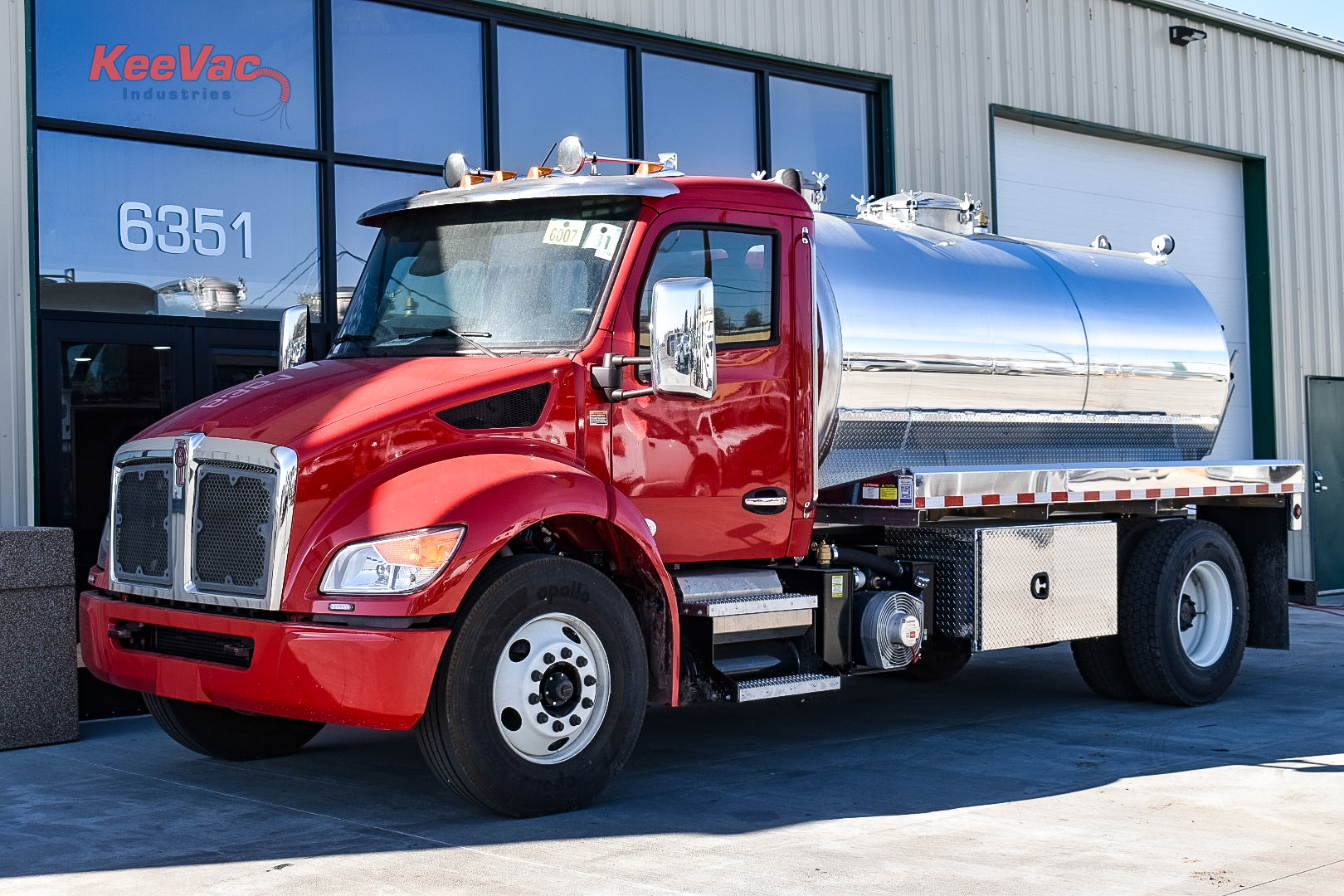
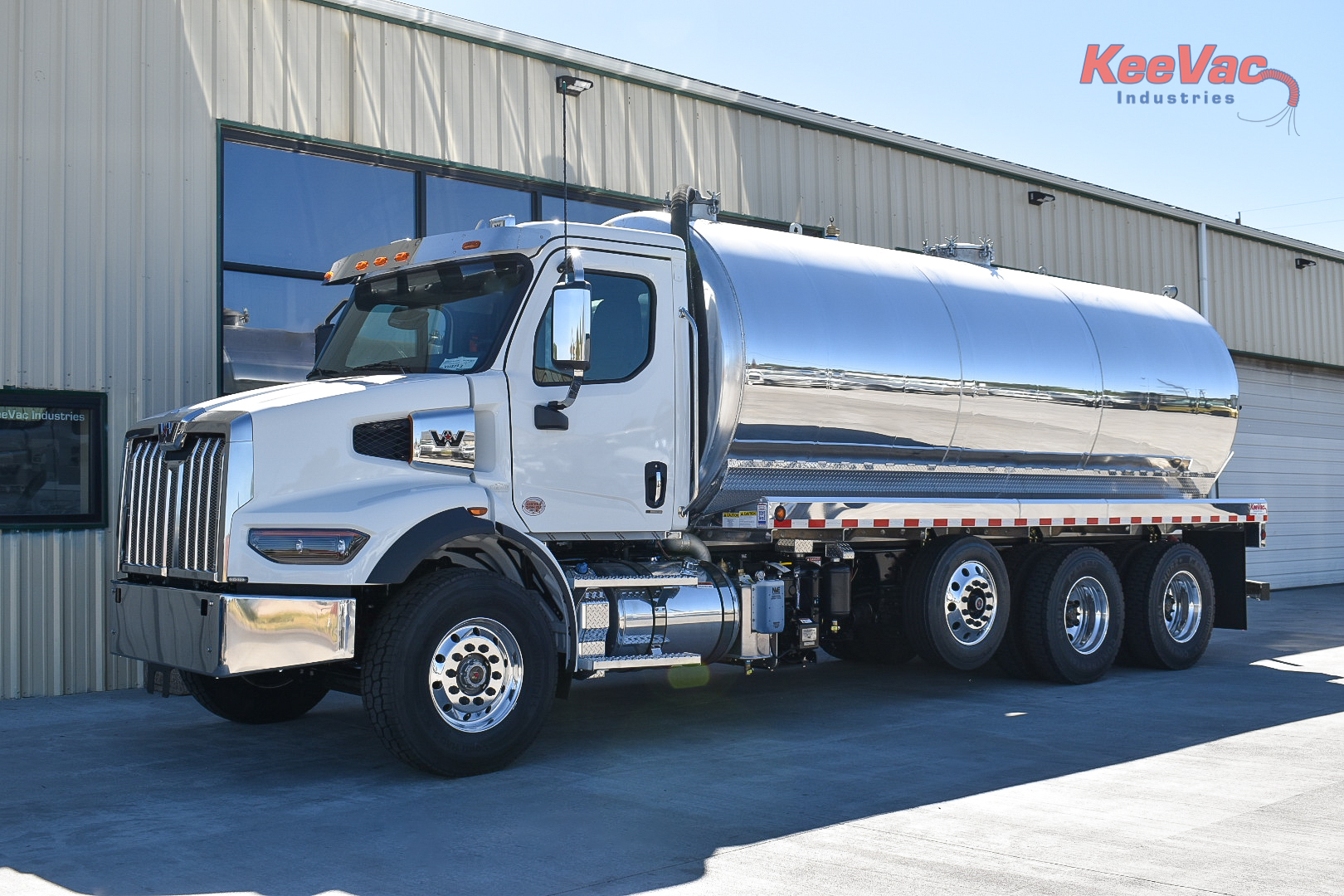
The right partner makes all the difference when you’re choosing a vacuum truck. KeeVac Industries is a Denver-based vacuum truck upfitter that focuses on practical, reliable builds tailored to your jobs and routes. We work with new and used chassis—including Ford, Chevrolet, Ram, International®, Peterbilt, Freightliner, Mack, Isuzu, and Kenworth—supplied by licensed dealers for all of our builds. Our team offers a variety of septic pump trucks and vacuum tanks for sale to fit your specific needs, and we specialize in slide-in pumper units for maximum flexibility. Our aluminum slide-in pumper units are designed to fit into the full-size bed of almost any pickup truck, giving you pro-grade pumping capability without committing to a full dedicated vacuum truck.
Whether you’re outfitting your first vacuum truck or standardizing a growing fleet, we’ll help you spec the right tank, pump, and chassis—then support you after delivery to keep you productive. Let’s build the truck that fits your work.
Contact us to explore options or start a conversation with our team today.
Whether you’re a seasoned professional or new to the sanitation industry, knowing how to maintain a septic truck is essential for running a profitable and efficient operation. Your septic truck is the beating heart of your business—hauling waste, powering suction equipment, and enduring demanding work conditions. Routine care not only ensures optimal performance but also extends the life of your investment and keeps you compliant with regulations.
Importance of Septic Truck Maintenance
Caring for your septic truck goes beyond aesthetics—it’s about safety, reliability, and compliance. Proper maintenance pays dividends by reducing costly repairs, minimizing downtime, and building customer trust.
Extending Truck Life
Regular maintenance significantly increases the lifespan of your septic truck. A well-maintained vehicle will easily outperform and outlast a neglected one. Following a consistent schedule reduces wear and tear on critical components like the engine, transmission, and pumping system. Over time, this translates into thousands of dollars in savings and the ability to put off costly truck replacements.
Reducing Emergency Repairs
No one wants a truck to break down mid-job. Due to towing fees, rush part orders, and overtime labor, emergency repairs often cost more. Preventive maintenance helps you identify small issues before they snowball into major problems. It’s the difference between replacing a worn hose and dealing with a full-blown hydraulic failure in the field.
Maintaining Compliance
Environmental and transportation agencies have strict regulations around waste transportation. A leaky tank or malfunctioning pump can result in serious fines and reputational damage. Staying ahead with maintenance ensures your septic truck passes inspections and stays compliant with state and federal laws.
Routine Maintenance Checklist
Your septic truck is a complex machine with multiple systems working in unison. Each part needs routine care to operate reliably. Here’s a breakdown of the key maintenance tasks that should be part of your regular checklist.
Tank Cleaning and Inspection
Frequency: Monthly or after every 20–30 jobs
Rinse the tank after each use to prevent buildup of waste residue. Hardened sludge can impair suction and reduce tank capacity.
Inspect for corrosion, dents, and weld cracks. Pay extra attention to older steel tanks; rust is a silent killer.
Check gaskets and seals for leakage or wear. Tight seals are critical for safe and odor-free operation.
Apply protective coatings or liners to steel tanks if signs of internal corrosion appear.
Pump and Hose Care
Frequency: Weekly and post-job inspections
Flush the pump system with clean water at the end of each workday to prevent clogs and odor retention.
Inspect hoses for cracks, bulges, or soft spots. Damaged hoses are not only inefficient but dangerous.
Check vacuum pump oil levels and change according to the manufacturer’s schedule, typically every 300 hours.
Examine hose couplings and clamps for tightness and integrity. A loose clamp can cause spills and pressure drops.
Grease fittings on the PTO (Power Take-Off) drive to ensure smooth power transfer.
Engine and Transmission Servicing
Frequency: As per OEM schedule (generally every 5,000–10,000 miles)
Change engine oil and filter to prevent engine wear.
Inspect belts and filters—air, fuel, and hydraulic—for blockages or damage.
Top off fluids: transmission, coolant, power steering, and brake fluid.
Check battery terminals for corrosion and ensure secure cable connections.
Perform a diagnostic scan to catch error codes or sensor issues early.
Common Maintenance Mistakes to Avoid
Even experienced operators can fall into maintenance traps. Avoiding these common errors can save time, money, and equipment.
Ignoring Small Leaks
A minor leak around a valve or tank seam might not seem urgent—but it is. These small leaks can quickly escalate, causing pressure loss, contamination, and environmental fines. What starts as a drip today could turn into a flood tomorrow.
Fix leaks immediately, no matter how insignificant they appear.
Use EPA-compliant sealants or gaskets when replacing parts.
Skipping Regular Inspections
Some operators assume that if the truck starts and pumps, it’s good to go. This false sense of security can lead to costly surprises.
Schedule pre- and post-job inspections.
Use a checklist to cover every system—don’t rely on memory.
Train all drivers to report abnormalities, no matter how small.
Delaying Pump Repairs
The vacuum pump is the lifeblood of your septic truck. Delaying pump repairs is one of the fastest ways to derail your business operations.
Don’t “ride out” noisy, vibrating, or underperforming pumps.
If you notice oil leaks, pressure loss, or temperature spikes, service the pump immediately.
Use manufacturer-recommended parts when rebuilding or replacing components.
Partnering with a Trusted Upfitter: KeeVac Industries
When it comes to building and maintaining septic trucks that last, the upfitter you choose makes a huge difference. That’s where KeeVac Industries comes in.
Why Choose KeeVac?
Based in Denver, KeeVac Industries specializes in vacuum truck upfitting, providing custom solutions for septic professionals nationwide. We work with both new and used chassis from trusted names like:
Ford
Chevrolet
Ram
International®
Peterbilt
Freightliner
Mack
Isuzu
Kenworth
Whether you’re upgrading a fleet or starting from scratch, we tailor each build to match your exact job requirements.
Vacuum Trucks & Septic Solutions
KeeVac offers a wide variety of septic pump trucks and vacuum tanks for sale. We also provide:
Aluminum slide-in pumper units that fit into most full-size truck beds—perfect for contractors needing maneuverability without sacrificing suction power.
Custom configurations for tank size, pump type, and hose length.
Built-in efficiency features like remote hose controls, dual-tank setups, and extra storage compartments.
Each vehicle is upfitted by expert technicians who understand the demanding nature of septic work. We ensure every detail—from tank welds to PTO installations—is designed for durability and ease of service.
Service That Supports You
Our commitment doesn’t stop at the sale. At KeeVac, we support our customers with:
On-site service and maintenance advice
Replacement parts and accessories
Phone support for troubleshooting pump issues
Custom design consultations to future-proof your business
When you buy from KeeVac, you’re investing in more than a truck—you’re gaining a partner dedicated to your success.
Final Thoughts
Septic trucks are hardworking machines that demand proper care to deliver reliable service. By understanding how to maintain a septic truck—and acting proactively—you’ll save on repairs, stay compliant, and increase the life of your equipment.
Here’s a quick recap:
Clean and inspect tanks regularly.
Don’t overlook pumps, hoses, and couplings.
Stick to your engine’s service intervals.
Avoid deferring repairs and inspections.
Keep detailed maintenance logs to track performance and anticipate needs.
And when you’re ready to invest in a custom septic truck solution, turn to a trusted industry leader.
Ready to Upgrade or Maintain Your Septic Truck?
KeeVac Industries is here to help you every step of the way—from choosing the perfect truck or slide-in unit to long-term service and support. Our high-performance builds, flexible financing, and expert craftsmanship ensure that your vacuum truck will work as hard as you do.
Explore our inventory or request a quote today.
Stay ahead of maintenance, stay ahead of the competition—with KeeVac.
When it comes to growing a septic service business, your truck is the heart of your operation. It’s not just a vehicle—it’s your mobile workstation, your brand on wheels, and a major investment. Whether you’re a startup business or a seasoned pro looking to expand your fleet, chances are you’ve searched the phrase “septic trucks for sale near me“ more than once. But how do you find the best local options? And how do you ensure you’re making a smart, long-term purchase?
How to Find Septic Trucks for Sale Near You
Finding septic trucks locally might seem daunting at first, especially with so many options on the market. But a combination of modern tools and traditional methods can help you quickly track down the right truck.
Searching Online Listings
Start by searching major commercial truck platforms like:
TruckPaper
Commercial Truck Trader
Facebook Marketplace
Craigslist
Use filters to narrow your search by location, price range, year, mileage, and manufacturer. Be sure to look closely at photos, seller ratings, and vehicle descriptions. Reputable sellers will often include tank size, vacuum pump model, and maintenance records.
Also, don’t overlook specialized dealer websites like KeeVac Industries. KeeVac provides detailed listings with high-res photos, build specs, and contact forms for custom builds—ideal for those who want new, used, or customized septic solutions.
Visiting Local Dealers
Sometimes, nothing beats walking the lot, opening the cab door, and kicking the tires (literally and figuratively). Local truck dealers often have inventory that never gets posted online. Building a relationship with a local dealer can also lead to better financing options, service support, and priority access to new inventory.
Tip: Bring a checklist of specs you’re looking for and take notes or pictures of each truck for easier comparison later.
Attending Equipment Auctions
Public and dealer-only auctions can offer excellent deals—if you know what you’re doing. Events hosted by Ritchie Bros., IronPlanet, or local auction houses often feature vacuum trucks, septic pumpers, and utility vehicles.
However, auction purchases are typically “as-is,” meaning no returns or warranties. Do your research beforehand, inspect in person if possible, and understand the terms and fees.
What to Look for When Buying a Septic Truck
Not all septic trucks are created equal. Whether you’re buying new or used, several crucial features and decisions can make or break the value of your investment.
Key Features and Specifications
Your septic truck should fit the specific needs of your business. Key specs to look for include:
Tank Size: Common sizes range from 800 to 4,000 gallons. Choose based on job size, local regulations, and average travel distance.
Vacuum Pump Type and CFM Rating: Popular pump models include Masport, Fruitland, and Jurop. A higher CFM rating means faster tank loading/unloading.
Hose Reel and Storage: Integrated storage compartments and powered hose reels increase efficiency and worker safety.
Chassis Make and Model: Ford, Chevrolet, Ram, International®, Peterbilt, Freightliner, Mack, Isuzu, and Kenworth are all solid options, depending on preference and dealer support in your area.
If you want a flexible solution, consider slide-in pumper units. Companies like KeeVac Industries offer aluminum slide-in pumper units designed to fit in the bed of almost any full-size pickup truck—perfect for smaller jobs, portable sanitation servicing, or tight urban routes.
New vs. Used Septic Trucks
New Trucks:
Pros: Customizable, under warranty, fewer repairs
Cons: Higher upfront cost
Used Trucks:
Pros: Lower cost, available immediately
Cons: May need repairs, shorter lifespan
KeeVac Industries offers both new builds and quality used septic trucks—each one thoroughly inspected and upfitted to meet high standards.
Warranty and Service Support
Make sure your truck comes with a solid warranty, especially for the vacuum system and tank build. Some upfitters offer extended warranties on the entire unit, including pump, tank, and PTO system.
You should also ask about:
Post-sale support
Access to parts
Authorized service centers near you
This is where choosing a trusted upfitter like KeeVac pays off. Based in Denver, we provide full support for all our vacuum truck builds and have years of industry experience working with every major chassis brand.
Questions to Ask Before Buying
You’ve found a truck you like. Great! But before you finalize anything, arm yourself with these critical questions:
Maintenance History
If you’re buying used, always ask:
What is the truck’s service history?
Have there been any major repairs?
How old is the vacuum pump?
Is the tank certified or due for recertification?
Ask to see maintenance logs or service invoices. A well-maintained truck is worth its weight in gold—and will save you thousands down the road.
Financing and Payment Options
Don’t let sticker shock stop you. Many dealers and upfitters, including KeeVac, offer financing options or can refer you to industry lenders.
Be sure to ask:
What down payment is required?
What are the interest rates and terms?
Are there lease-to-own programs?
Flexible financing is especially valuable for small businesses looking to expand without draining cash reserves.
Delivery and Transportation Logistics
Even if you find your dream truck halfway across the country, don’t let location be a deal-breaker.
Ask:
Do you offer delivery or shipping?
What’s the lead time on a new build?
Can I arrange my own transport?
KeeVac Industries, for example, works with buyers nationwide and can help coordinate safe, reliable transport of your vacuum truck directly to your door.
Why Choose KeeVac Industries for Your Septic Truck Needs?
If you’re serious about quality, customization, and long-term value, look no further than KeeVac Industries.
Trusted Industry Experts
With years of experience building vacuum trucks, KeeVac specializes in septic pumpers, grease trap service trucks, and portable restroom service units. We use only new and used chassis supplied by licensed dealers, including Ford, Chevrolet, Ram, International®, Peterbilt, Freightliner, Mack, Isuzu, and Kenworth.
Custom Builds for Any Business Size
Whether you’re servicing rural homes, busy metro areas, or special event sites, KeeVac can design a septic truck that works for you. Choose from:
Aluminum, steel, or stainless steel tanks
Masport, Jurop, or other pump systems
Slide-in pumper units for compact pickup trucks
Complete turnkey units ready for immediate service
Nationwide Service and Delivery
Located in Denver, KeeVac builds and ships vacuum trucks across the U.S. Our expert team provides end-to-end service—from selecting a chassis to final inspection—so you get exactly what you need, no surprises.
Finding the Right Septic Truck Starts Locally—But Ends with Quality
Searching “septic trucks for sale near me” is just the beginning. The real value comes from asking the right questions, comparing your options, and working with a reputable dealer who understands your business.
So, whether you need a heavy-duty workhorse or a compact slide-in pumper unit, let the team at KeeVac Industries help you build the perfect septic truck for your needs.
Ready to Get Started?
Browse our available models or request a custom-build quote. Whether you’re looking for a brand-new vacuum truck or a reliable used septic unit, KeeVac is here to deliver quality, service, and value—every mile of the way.
Operating a vacuum or septic pump truck isn’t just about suction power and tank size—it’s also about understanding and adhering to a complex web of regulations. From environmental laws to transportation safety standards, compliance is critical to ensuring your business runs smoothly and avoids costly fines or shutdowns.
Understanding Key Regulations in the Industry
Operating a vacuum or septic pump truck involves handling and transporting waste materials, often across city, county, and even state lines. As such, various regulations apply from multiple governing bodies.
Federal vs. State Regulations
One of the most important distinctions to understand is the difference between federal and state regulations:
Federal Regulations: The U.S. Department of Transportation (DOT) and the Environmental Protection Agency (EPA) oversee several key areas:
DOT: Ensures trucks meet size, weight, and operational standards. Commercial Driver’s License (CDL) requirements, Hours of Service (HOS) rules, and vehicle inspections fall under this umbrella.
EPA: Governs the handling and disposal of waste to protect public health and the environment. Wastewater, grease, and other hazardous materials must be processed and disposed of in EPA-compliant ways.
State and Local Regulations: These can vary significantly and may include additional permitting, disposal protocols, or zoning restrictions. For example:
States like California or New York may require stricter emissions controls or tracking systems for waste disposal.
Local municipalities might limit dump site access or require specific reporting methods.
Understanding both layers is crucial. Always check with your state’s Department of Environmental Protection (DEP) or Department of Transportation for specifics.
Compliance Challenges and How to Overcome Them
While staying compliant might sound straightforward on paper, real-world challenges often pop up. Let’s tackle the most common ones and share strategies for overcoming them.
Misunderstanding Permit Requirements
One major issue is failing to obtain or renew necessary permits. This could include:
Septic waste transportation permits
Hazardous material transport licenses
Local business operating licenses
Solution: Create a permitting calendar with automatic reminders for renewals and inspections. Designate a compliance officer or administrative team member to oversee this process.
Incomplete or Inaccurate Documentation
Failure to maintain accurate manifests and service records is one of the most common compliance violations. These documents are essential for:
Demonstrating lawful waste disposal
Proving compliance during inspections or audits
Solution: Switch from paper logs to digital recordkeeping systems (we’ll discuss this further later) and train your drivers on proper documentation practices.
Overlooking Vehicle Maintenance
DOT regulations require regular vehicle maintenance and safety checks. If your vacuum truck isn’t road-safe, you risk violations and vehicle downtime.
Solution: Implement a pre- and post-trip inspection checklist for your drivers. Schedule quarterly preventive maintenance for your fleet and keep service records readily available.
Resources and Tools for Regulatory Management
Thankfully, modern tools can help you stay on top of compliance more easily than ever. Here are some resources to put into your operations toolbox.
Digital Fleet Management Platforms
Fleet management software like Samsara, Geotab, or Verizon Connect helps with:
Tracking HOS
Monitoring vehicle diagnostics
Logging maintenance and inspections
Generating compliance reports for audits
These systems are invaluable for businesses managing multiple trucks across various regions.
EPA and DOT Compliance Guides
Government agencies often publish free compliance handbooks or e-learning modules:
EPA’s Small Business Compliance Policy provides guidance specifically tailored to small operators.
FMCSA’s Compliance, Safety, Accountability (CSA) program helps truck owners understand their safety score and what affects it.
Bookmarking these resources ensures you’re never too far from trustworthy info.
Industry Associations
Joining an industry group like the National Association of Wastewater Technicians (NAWT) or Portable Sanitation Association International (PSAI) connects you with experts, legal updates, and a community that understands your business.
Best Practices for Record Keeping and Reporting
Solid recordkeeping is the backbone of compliance. Without detailed logs, manifests, and reports, proving adherence to regulations becomes nearly impossible.
Embrace Cloud-Based Systems
Paper logs are outdated and easily lost or damaged. Cloud-based platforms let you:
Instantly access service histories
Back up records for years
Automatically populate reports
Integrate with mobile apps for field workers
This makes it easier to respond to audits or inquiries from local regulators without breaking a sweat.
Keep Daily Logs of Service Activities
Require drivers and technicians to document:
Pickup and drop-off times
Customer addresses
Waste types and volumes
Disposal site used
Make sure logs are signed digitally and timestamped.
Retain Documents for the Required Duration
Different records have different retention requirements:
Driver logs: Minimum of 6 months
Maintenance records: At least 12 months or for 6 months after the vehicle leaves your control
Disposal manifests: Generally 3-5 years
Double-check with your local and federal authorities for specific timelines.
Case Studies of Compliance Success
Case Study 1: A Colorado Septic Company Streamlines Inspections
A mid-sized septic pumping company in Colorado was struggling with recurring DOT violations due to missed maintenance logs and expired permits. After investing in a fleet management platform and hiring a part-time compliance coordinator, they saw a 70% reduction in compliance issues within the first year.
They now use KeeVac Industries’ custom-built vacuum trucks equipped with smart technology that integrates with their compliance software, making daily logs easier and maintenance alerts automatic.
Case Study 2: Florida Operator Reduces Fines with EPA Training
A solo vacuum truck operator in Florida faced thousands in EPA fines for improper disposal documentation. He took online EPA compliance training and implemented a digital manifest tool. Within six months, he passed two audits with zero citations.
Now, he proudly shares that his slide-in pumper unit from KeeVac fits perfectly in his Ram 3500 pickup and helps him service clients in rural areas efficiently while remaining fully compliant.
Why Compliance Matters More Than Ever
Ignoring vacuum truck regulations isn’t just a legal risk—it’s a business risk. Noncompliance can result in:
Hefty fines (ranging from hundreds to tens of thousands of dollars)
Loss of operating licenses
Damaged reputation with clients
Potential environmental harm or public health hazards
In contrast, consistent compliance offers:
Fewer business interruptions
Stronger relationships with regulators and customers
Improved employee safety
Peace of mind for you and your team
Ready to Stay Compliant? KeeVac Industries Can Help!
At KeeVac Industries, we know that success in the septic and vacuum pumping industry hinges on more than just powerful trucks. It takes reliable, regulation-ready equipment that meets the highest standards of safety, performance, and compliance.
We offer an extensive range of septic pump trucks, vacuum tanks, and slide-in pumper units built using new and used chassis from leading names like Ford, Chevrolet, Ram, International®, Peterbilt, Freightliner, Mack, Isuzu, and Kenworth. Whether you’re just starting out or scaling your fleet, our custom upfitting solutions are tailored to your exact operational needs and local compliance requirements.
Our Denver-based team is committed to delivering top-tier builds with exceptional customer service. From smart configurations to compliance-ready features, our vacuum trucks are made to handle the real-world demands of your industry—and help you stay on the right side of the law.
Contact Us Today
Need a truck that works as hard—and as smart—as you do? Explore our inventory or speak to our team about a custom build that fits your business and regulatory needs. Because when it comes to vacuum truck regulations, the right truck makes all the difference.
As technology evolves and sustainability becomes a driving force in fleet operations, businesses face a critical choice when upgrading or expanding their vacuum truck fleets: diesel or electric? In 2025, both technologies have distinct advantages and trade-offs that impact performance, cost, and environmental sustainability. Whether you operate a large commercial outfit or a small septic service, understanding these differences can help you make the most informed decision for your business.
At KeeVac Industries, we specialize in upfitting vacuum trucks using a wide range of new and used chassis from licensed dealers, including Ford, Chevrolet, Ram, International®, Peterbilt, Freightliner, Mack, Isuzu, and Kenworth. Our vacuum trucks are built to meet your exact specifications, whether you’re looking for a full septic pump truck or one of our popular aluminum slide-in pumper units. Let’s explore the differences between diesel and electric vacuum trucks in depth.
Overview of Diesel and Electric Engine Technologies
Diesel Engines
Diesel vacuum trucks have long been the backbone of industrial waste collection and septic services. Known for their torque, durability, and wide serviceability, diesel engines are a reliable choice for high-demand applications.
Key Benefits of Diesel Engines:
Strong performance, especially in heavy-duty and off-road conditions
Widespread fueling infrastructure
Long history of industry use and technician familiarity
High torque output for towing and suction tasks
Electric Engines
Electric vacuum trucks represent the next generation of fleet technology. With zero tailpipe emissions and much quieter operation, they are becoming more appealing as environmental regulations tighten and cities push toward electrification.
Key Benefits of Electric Engines:
Zero tailpipe emissions
Reduced noise pollution
Lower operational costs (no fuel, less maintenance)
Eligibility for state and federal incentives
Electric vehicles (EVs) in the heavy-duty sector are rapidly gaining traction thanks to advances in battery technology and a growing charging infrastructure.
Environmental and Economic Impacts
Impact on Fleet Sustainability
Switching to electric vacuum trucks can dramatically improve your company’s environmental profile.
Electric:
No greenhouse gas emissions from the tailpipe
Potential for 100% renewable operation if charged using green energy
Lower particulate pollution, which is especially important in urban environments
Diesel:
Advances in emissions control have reduced impact, but still produce NOx and CO2
More frequent maintenance requirements mean more resource consumption
Fuel consumption contributes significantly to overall carbon footprint
Electric trucks may be a strategic advantage for companies aiming for sustainability certifications or working in environmentally sensitive areas.
Cost Comparison Over Time
Initial Investment:
Diesel trucks are still cheaper upfront than electric trucks
Electric trucks can be more expensive due to battery technology and newer components
Operational Costs:
Electric vacuum trucks typically cost less to operate: no fuel and fewer mechanical failures
Electric drivetrains have fewer moving parts and require less frequent service
Diesel engines may last longer in extreme-duty settings but come with higher upkeep
Incentives:
Electric trucks may qualify for local, state, or federal grants and tax breaks
Diesel options are typically not eligible for these financial perks
Over a 10- to 15-year lifespan, the total cost of ownership can be lower for electric trucks, especially for operations with consistent routes and access to charging infrastructure.
Future Trends in Vacuum Truck Power Sources
Performance Metrics and Efficiency
In 2025, performance is no longer a one-sided conversation. While diesel engines still dominate in raw power and field-proven ruggedness, electric vacuum trucks are catching up quickly.
Diesel Trucks:
Better for remote operations where charging stations are unavailable
Superior towing capacity for extreme loads
Better suited for continuous 24/7 operation
Electric Trucks:
Quick torque delivery, great for stop-and-go urban routes
High energy efficiency: fewer losses in the drivetrain
Ideal for predictable, short to mid-range daily routes
Battery life and range are improving year over year, making electric trucks viable for an increasing range of applications.
Infrastructure and Charging Considerations
One of the most significant challenges facing electric vacuum trucks is the need for charging infrastructure.
Charging Times: Fast-charging stations can replenish 80% battery in under 2 hours for most commercial-grade EVs.
Depot Charging: Many fleet operators install overnight charging stations at their garages.
Public Infrastructure: Growth in EV infrastructure across the U.S. continues to support electric fleet growth.
Conversely, diesel trucks benefit from a robust and nationwide refueling network that supports long-haul or remote work.
Regulatory and Market Momentum
Federal and state regulations are pushing hard toward lower-emission fleets.
Other states are adopting similar rules, which will increase demand and availability for electric vacuum trucks.
Corporate Environmental, Social, and Governance (ESG) goals are incentivizing companies to go electric.
Companies that adopt electric vehicles early are more likely to stay ahead of compliance demands and gain reputational benefits.
Making the Right Choice for Your Operation
So, should you stick with a diesel workhorse or invest in a cutting-edge electric vacuum truck?
Here are a few questions to guide your decision:
Do you operate in urban environments where noise and emissions are a concern?
Are your routes predictable and within 100–150 miles daily?
Do you have access to charging infrastructure?
Is your company focused on sustainability and ESG reporting?
Is up-front cost or long-term savings more important to your operation?
Diesel vacuum trucks are tried and true—perfect for rugged terrain, long hauls, and remote job sites.
Electric vacuum trucks are the future of sustainable fleet management. They are ideal for city-based services, regulatory compliance, and lower operational costs.
Why Choose KeeVac Industries?
At KeeVac Industries, we don’t believe in a one-size-fits-all solution. Our mission is to provide you with vacuum truck builds that reflect your specific operational needs, budget, and values.
We work with new and used chassis from trusted brands like Ford, Ram, International®, Kenworth, and more.
We offer custom builds, including slide-in aluminum pumper units that fit almost any full-size pickup bed.
Our Denver-based team delivers unmatched customer service, technical support, and durable construction.
Whether you want to upgrade your current diesel fleet or explore the possibilities of electric vacuum trucks, we can guide you every step of the way.
Partner with Us Today
Ready to take the next step in modernizing your vacuum truck fleet? Whether you’re curious about electric vacuum trucks or want to continue leveraging diesel power, KeeVac Industries has the expertise, inventory, and passion to get you on the road with confidence.
Contact us today to explore our wide range of septic pump trucks, vacuum tanks, and slide-in pumper units. Let us help you build the truck that works as hard as you do—diesel or electric, we’re here to power your progress!