How Much Does a Portable Restroom Truck Cost? 2026 Price Guide
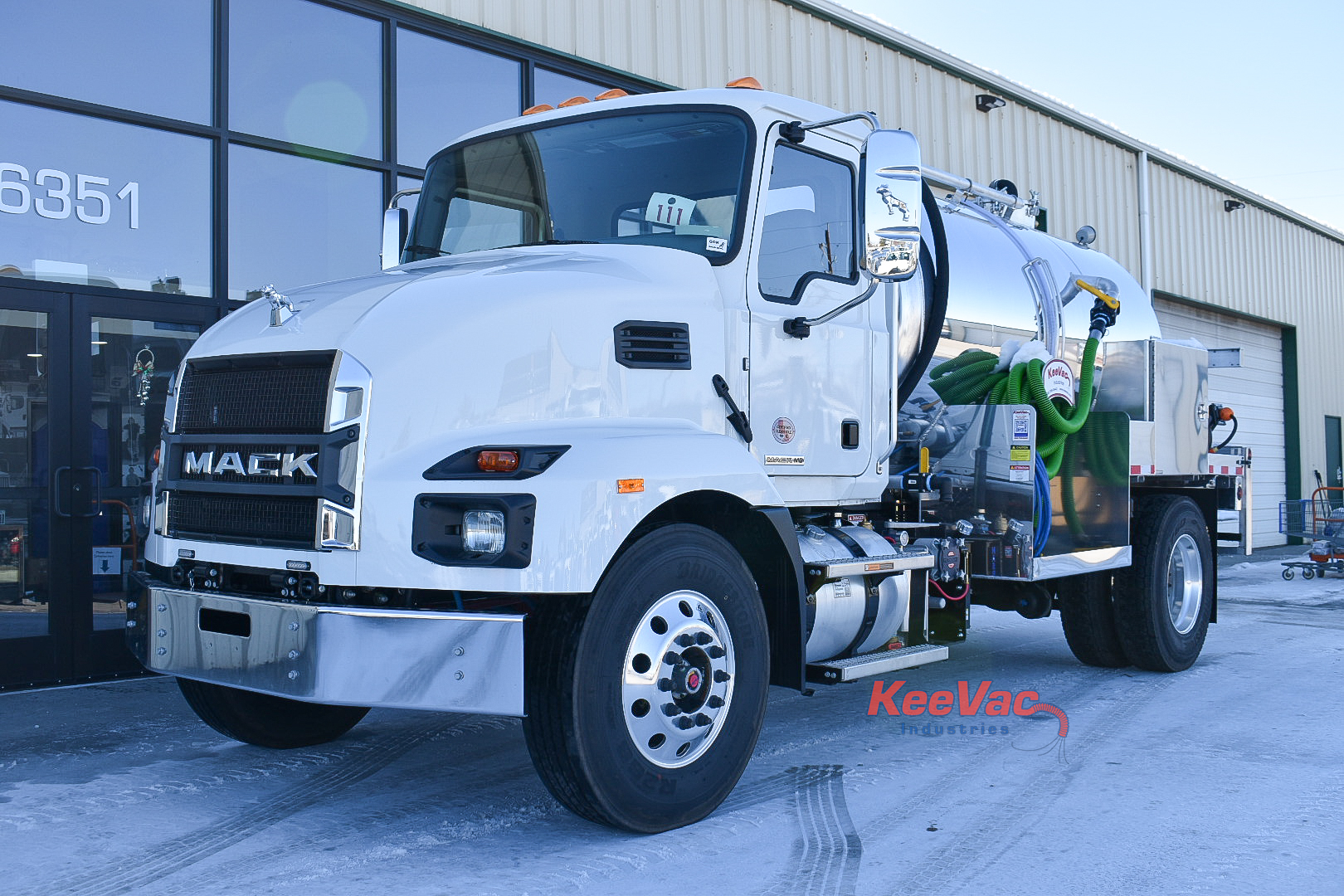
Anyone building a portable sanitation fleet eventually asks the same question about the first big purchase: what will it cost? The portable restroom truck cost depends on four things more than any others: tank size and material, the pump and water system, the chassis, and the upfits. New trucks commonly land between $65,000 and $150,000, and used trucks often start around $30,000 to $60,000. Knowing what sits behind those numbers helps you buy the truck your routes need instead of the one with the biggest price tag.
A portable restroom truck pairs a vacuum tank, a vacuum pump, a washdown pump, hose reels, and a toilet carrier on a truck chassis. It services portable toilets at job sites, events, and along regular routes, which is why the tank, the pump package, and the chassis all have to work together.
Portable Restroom Truck Cost: Typical Price Ranges for New and Used Trucks
Most buyers fall into one of three groups. The ranges below are planning figures, not quotes, because no two trucks are built alike.
| Truck type | Typical planning range | What you usually get |
|---|---|---|
| Used truck | About $30,000 to $60,000 | A pre-owned chassis, tank, and pump. Condition, mileage, and service history decide the value. |
| New standard build | About $65,000 to $150,000 | A new chassis, a vacuum tank, vacuum and water pumps, hoses, hose reels, and required lighting. |
| Highly customized build | Above $150,000 | Extra compartments, upgraded pumps, a heavier chassis, and specialty upfits. |
A base build includes the chassis, the tank, the pump system, the hoses and fittings, and the labor to integrate everything. Above that baseline, larger tanks, extra compartments, upgraded pumps, and custom storage are what push the price toward the upper end of the range. A used truck can lower the entry cost, but it trades that saving for limited warranty coverage and a higher chance of repairs and downtime.
What Drives Portable Restroom Truck Cost
Four decisions account for most of the difference between a lower-cost truck and a premium build. Understanding each one lets you spend where it pays back and save where it does not.
| Cost driver | How it moves the price | How to manage it |
|---|---|---|
| Tank size and material | Larger tanks and more compartments cost more to fabricate | Match capacity to a full day of stops, and choose aluminum if payload matters |
| Pump and water system | Bigger vacuum pumps and high-pressure washdown systems add cost | Pick the pump rating your routes need, not the largest available |
| Chassis | Often the largest single line item, and it rises with weight class | Use a customer-supplied chassis if you already own a suitable truck |
| Upfits and options | Storage, heaters, lighting, and special valves add up quickly | Prioritize options that save time on every stop |
Tank Size and Material
The tank is the core of the truck. KeeVac’s portable restroom service trucks use polished 5454 aluminum, a corrosion-resistant alloy, in 999, 1,200, 1,500, and 2,000-gallon sizes, with stainless steel and carbon steel available for operators who prefer them. Aluminum costs more up front, but it is lighter than steel, which means a truck can carry more waste per trip and make fewer runs to the dump. Tanks can also be built with separate compartments so fresh water and waste are carried apart, and that added fabrication is part of the price.
Pump and Water System
KeeVac’s standard build uses the Masport HXL4V plug-and-play system, which includes a vacuum and pressure pump with an integrated oil reservoir, a flush kit, and a secondary shutoff. It is paired with a 12-volt DC-10 washdown pump rated at 20 GPM at 42 PSI and a Hannay spring-rewind hose reel. Upgrades such as high-pressure water pumps and jetters, valve heaters, and different valve sizes add cost, but they can pay for themselves on routes with heavy or difficult service calls. New builds also include a one-year manufacturer’s warranty on both the vacuum pump and the water pump.
Portable Restroom Truck Cost by Chassis and Weight Class
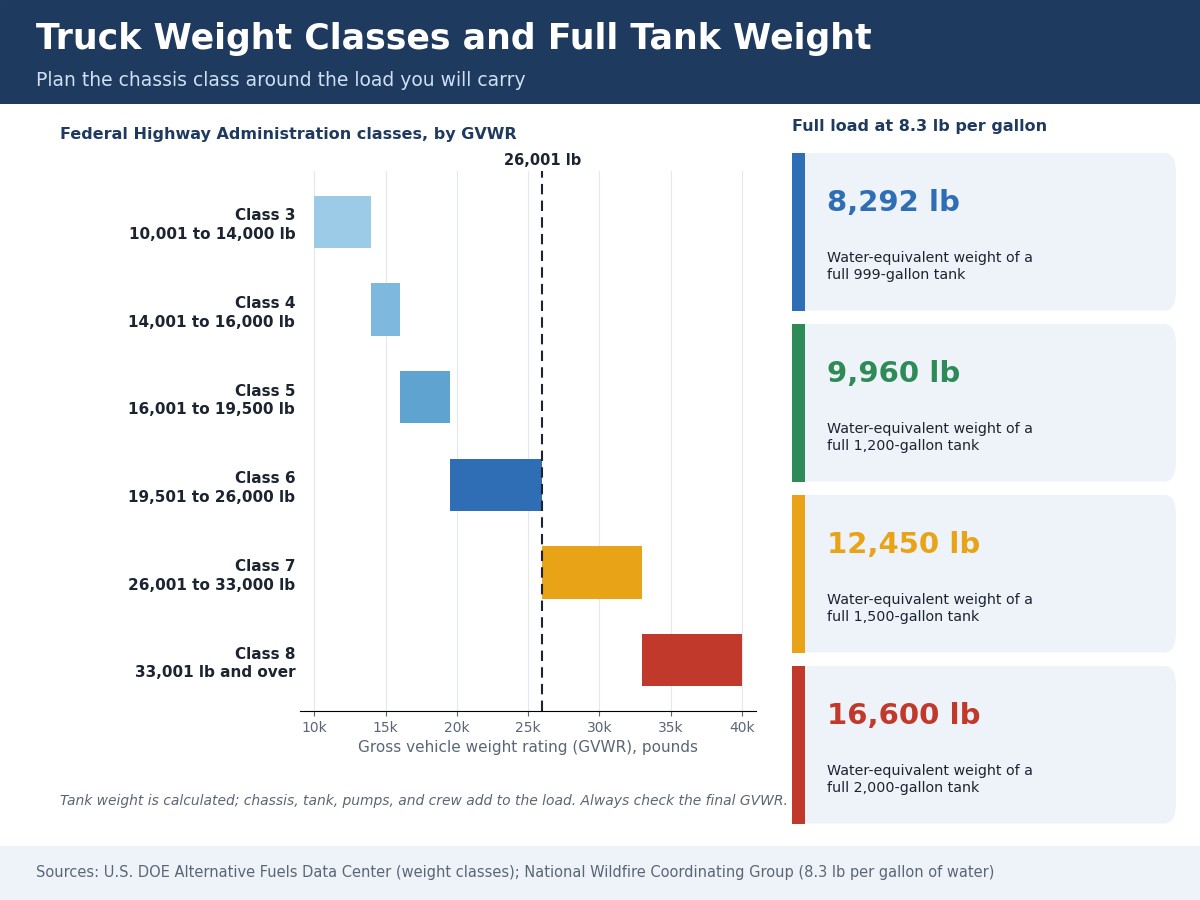
The chassis often accounts for the largest share of the bill, and the weight class is what drives it. The U.S. Department of Energy groups trucks into eight classes based on gross vehicle weight rating, and each step up generally means a heavier frame, a bigger engine, and a higher price. Class 6 tops out at 26,000 pounds, and Class 7 begins at 26,001 pounds, a threshold many operators plan around when they size a truck for their drivers.
Sources: U.S. DOE Alternative Fuels Data Center, Vehicle Weight Classes; National Wildfire Coordinating Group, Table 3.1
The load itself matters. Water weighs about 8.3 pounds per gallon, so a full 1,200-gallon tank holds roughly 9,960 pounds of liquid, and a full 2,000-gallon tank holds about 16,600 pounds, before adding the chassis, tank, pumps, and crew. KeeVac builds on a wide range of chassis, including Ford, Dodge, Chevy, International, Kenworth, Isuzu, Peterbilt, Freightliner, Hino, and Mack. Customers can also supply their own chassis at no extra cost after the sales team reviews it, which is one of the most effective ways to reduce the total.
Upfits and Custom Options
Upfits are where two trucks with the same tank can end up with very different price tags. Common options include belly dump or rear dumping configurations, manways for easier cleaning, two large toolboxes, work lighting, a rear-mounted toilet carrier, and scent boxes that help reduce odor. Operators in cold climates add valve heaters, and 4×4 buyers can choose modified transfer cases for Dodge and Ford chassis to avoid hydraulic maintenance. If you want a layout that fits your crew exactly, custom truck configurations let you pay for the features that save time on every stop and skip the ones that do not.
|
Pricing a portable restroom truck? Tell us your tank size, chassis preference, and route count, and we will quote a build around your operation, including builds on a chassis you already own.
|
New vs Used Portable Restroom Trucks
The right choice depends on how fast you need to start earning and how much risk you can carry. The sticker price is only part of the comparison.
| Factor | New truck | Used truck |
|---|---|---|
| Upfront cost | Higher | Lower, often by a wide margin |
| Warranty | Manufacturer warranty on the chassis and a one-year warranty on KeeVac vacuum and water pumps | Limited or none, depending on the seller |
| Configuration | Built to your tank, pump, and upfit choices | Whatever the previous owner chose |
| Downtime risk | Lower in the early years | Higher, with repairs more likely |
| Financing | Usually the most flexible terms | Terms can be shorter and more limited |
| Resale | A well-maintained truck holds value longer | Depreciates faster, driven by age, mileage, and service history |
Lead times also differ. A used truck is ready sooner, but a new build gives you control over every option. If a project depends on a start date, ask about build timelines before you commit, and compare quotes on the same tank size, pump package, and chassis class so the numbers are truly comparable.
Financing and Tax Options That Lower the Cost of Ownership
Few operators pay for a truck in cash. Spreading the cost across the years the truck earns revenue keeps cash available for fuel, labor, and insurance, and KeeVac’s equipment financing options are a good place to begin the conversation. Two federal programs can improve the math further.
SBA Loans for Equipment Purchases
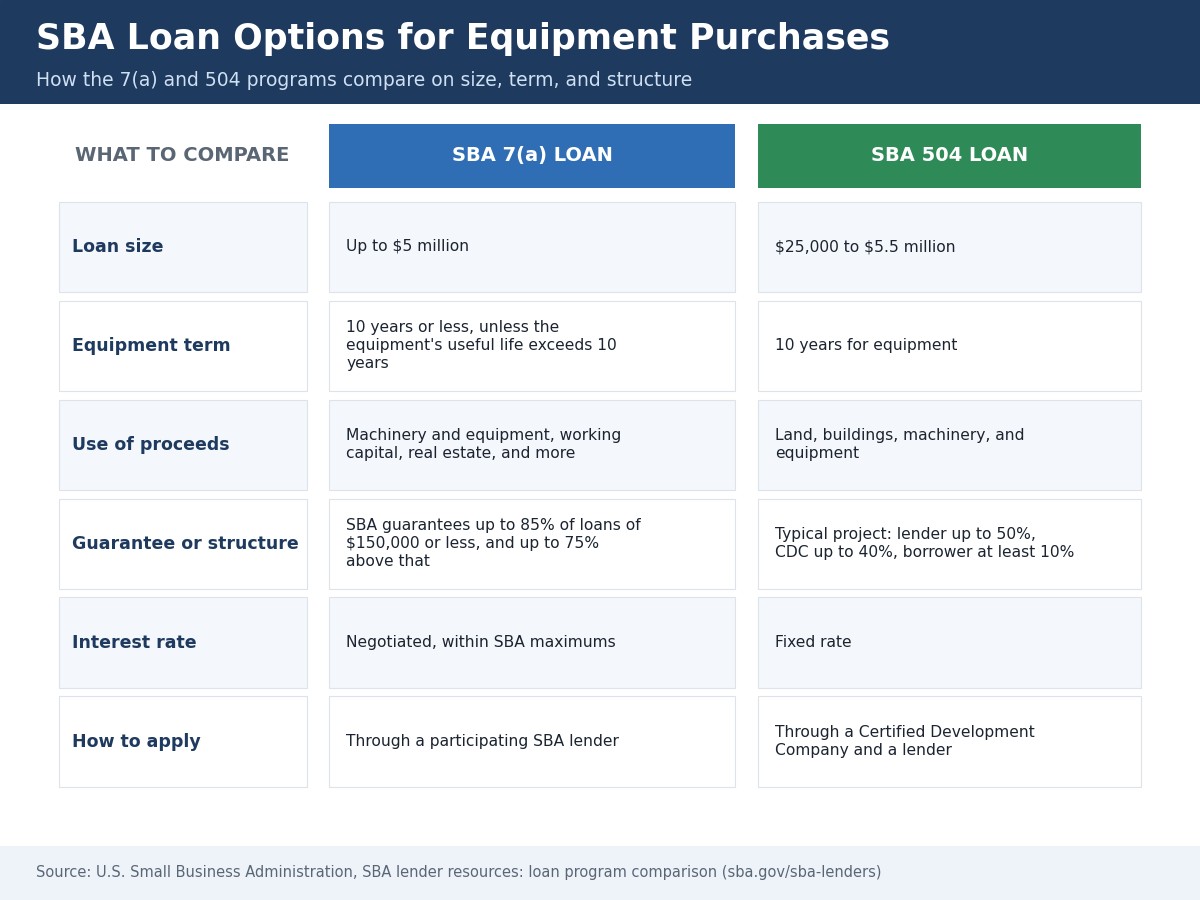
The U.S. Small Business Administration guarantees loans made by participating lenders. Its 7(a) program offers loans of up to $5 million and allows proceeds to be used for purchasing and installing machinery and equipment. Equipment terms are generally ten years or less, and SBA guarantees up to 85 percent of loans of $150,000 or less and up to 75 percent of larger loans. The 504 program runs from $25,000 to $5.5 million and carries a ten-year term for equipment. Borrowers apply through a lender rather than SBA, and the lender negotiates the interest rate within SBA maximums.
Source: U.S. Small Business Administration, SBA lender resources
Section 179 Expensing for 2026
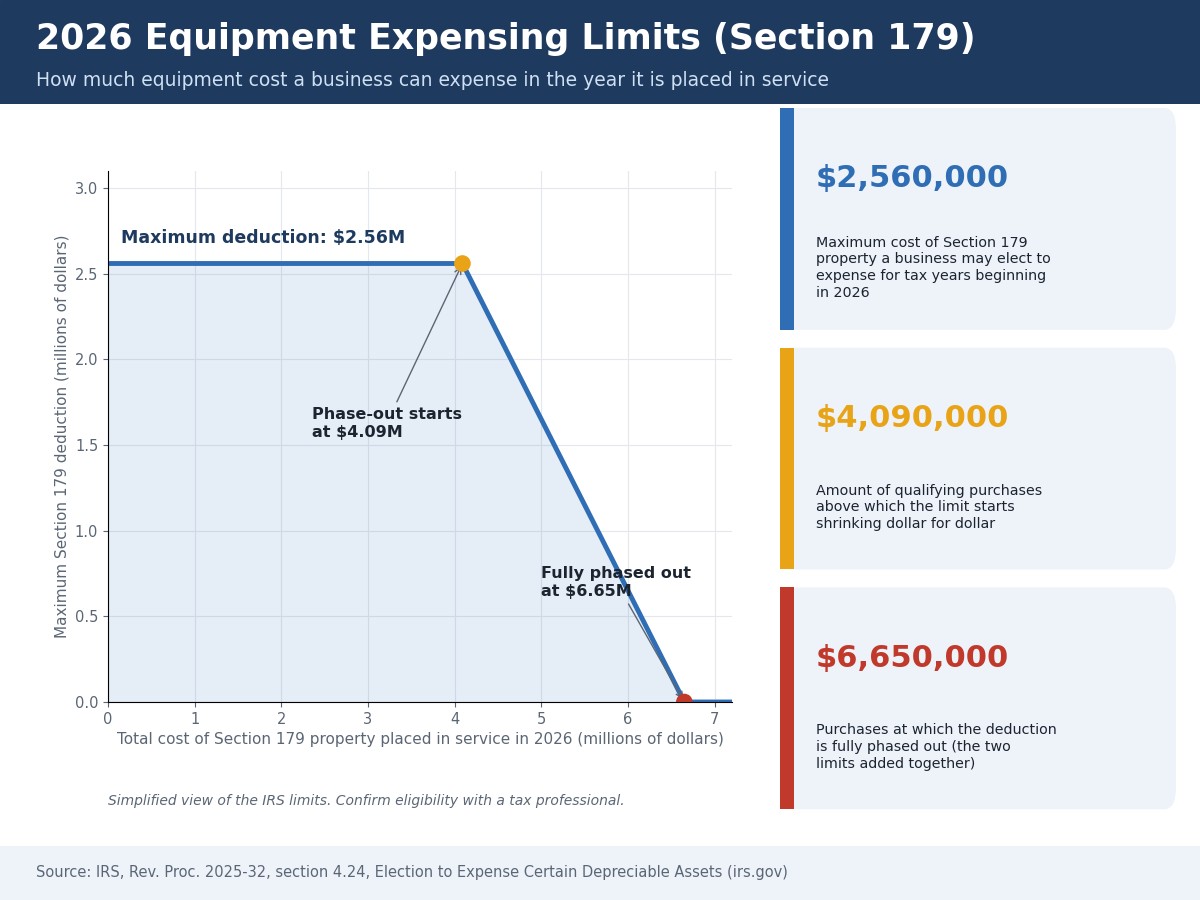
Section 179 of the tax code lets a business expense qualifying equipment in the year it is placed in service rather than depreciating it over time. Under IRS Revenue Procedure 2025-32, the limit for tax years beginning in 2026 is $2,560,000, and it starts to shrink once the cost of qualifying property placed in service passes $4,090,000. A single truck sits far below those thresholds, so the limit is rarely the constraint. Eligibility, elections, and bonus depreciation rules depend on your situation, so talk with a tax professional before you buy.
Source: IRS, Rev. Proc. 2025-32, section 4.24
Total Cost of Ownership: What You Pay After the Purchase
The purchase price is one line in a longer budget. Operators who track the full cost of ownership over five to ten years make better buying decisions than those who compare quotes alone. Plan for these recurring costs:
- Fuel: engine and pump hours both burn fuel, and a heavier chassis uses more of it
- Insurance and registration: rates rise with truck value and weight class
- Maintenance: oil, filters, pump service, hose and gasket replacement, and tank inspections
- Labor: driver and technician time per stop and per day
- Disposal: trips and fees at the receiving facility, which fall as tank capacity rises
- Downtime: every day the truck is in the shop is a day of lost billable service
A strong preventive routine protects uptime, and KeeVac’s truck maintenance resources outline inspection habits you can adapt to your fleet.
When a pump, valve, hose, or gasket does wear out, replacement vacuum pump and valve parts are available so a repair does not turn into a long layoff.
Think of the truck as a revenue-producing asset. A larger tank and a stronger pump may cost more up front, but they can reduce daily trips, save fuel, and increase billable stops. In many cases the most expensive truck is the cheapest one once you compare revenue per day against ownership cost.
Choosing the Right Truck Size for Your Routes
The right size depends on stops per day, distance to the disposal site, and how much weight your chassis can legally carry. Dense urban routes with short drives to the dump often run well on a mid-size tank. Rural routes and event work usually favor larger tanks because every trip to the disposal site is longer.
Smaller operations and crews that need a flexible work truck often start with aluminum slide-in vacuum units, which fit a pickup bed and can be removed when the truck is needed for other work. Operators who deliver and pick up units as well as service them can also add pickup and delivery trucks for portable toilet units to the fleet so the service truck stays on its route.
Portable Restroom Truck Cost FAQs
How much does a portable restroom truck cost?New portable restroom trucks commonly fall between about $65,000 and $150,000, and highly customized builds can cost more. The final price depends on tank size and material, the pump and water system, the chassis, and any upfits you add. |
How much does a used portable restroom truck cost?Used portable restroom trucks often start around $30,000 to $60,000. Condition, mileage, pump hours, and service history matter more than age, and used units usually come with limited warranty coverage. |
What is the biggest part of the cost of a portable restroom truck?The chassis is often the largest single line item, followed by the tank and the pump package. A heavier chassis class costs more but carries a larger load, so match it to the tank size and the weight you plan to haul. |
Can I supply my own chassis for a portable restroom truck?Yes. KeeVac builds on customer-supplied chassis at no extra cost, provided the sales team reviews the chassis first to confirm it meets the requirements for the upfit. This can lower the total cost if you already own a suitable truck. |
What tank sizes are available for a portable restroom truck?KeeVac’s portable restroom truck tank packages are available in 999, 1,200, 1,500, and 2,000 gallons. The tanks are aluminum, with stainless steel and carbon steel available for operators who prefer them. |
What warranty comes with a portable restroom truck?KeeVac portable restroom trucks include a one-year manufacturer’s warranty on the vacuum pump and the water pump. The chassis carries its own manufacturer warranty, so confirm both when you compare quotes. |
Can I finance a portable restroom truck?Yes. Equipment financing is common for trucks like these, and SBA 7(a) loans of up to $5 million can be used to purchase machinery and equipment. SBA works through participating lenders, so a lender will set the final rate and terms. |
Is a portable restroom truck tax deductible?Qualifying business equipment may be expensed under Section 179. For tax years beginning in 2026, the IRS limit is $2,560,000, and it begins to phase out once qualifying purchases exceed $4,090,000. Eligibility depends on your situation, so confirm the details with a tax professional. |
Get a Quote for Your Portable Restroom Truck
The best way to understand your own numbers is to start with your routes, your tank size, and your budget. KeeVac’s full equipment lineup covers portable restroom, septic, grease, and custom builds, and every truck can be configured to fit the way you work.
If you want help comparing options, you can talk with a truck specialist and walk through chassis choices, tank sizes, and financing before you request a quote.
|
Ready to price your portable restroom truck? Share your tank size, chassis preference, and timeline, and we will build a quote around your operation.
|